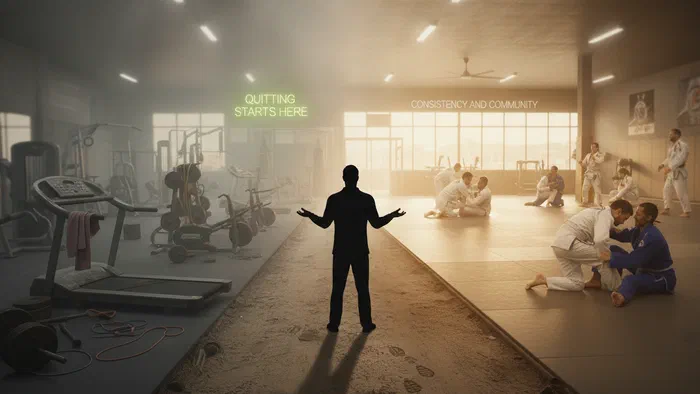
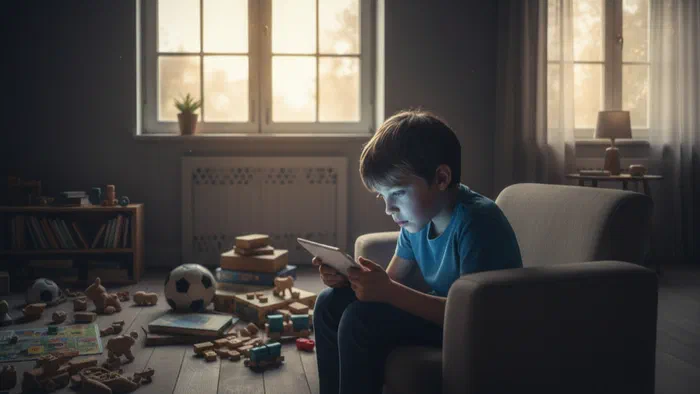
70% of Kids Quit Sports by 13. Why Jiu Jitsu Kids Don't.
Last fall, a mom in our lobby told me something that stuck with me. Her daughter had played travel soccer for three years. The family spent weekends driving to tournaments in Milwaukee and Chicago. They bought new cleats every season, paid for private coaching, covered tournament fees. Thousands of dollars. Then one Tuesday, her daughter came home and said, "I don't want to play anymore."
Just like that.
No big incident. No injury. She just stopped having fun.
This mom wasn't angry. She was confused. She'd done everything right. Supported her kid. Showed up to every game. Wrote the checks. And her daughter still walked away.
If that sounds familiar, you're not imagining things. Something is broken in youth sports, and the numbers tell the story.
The dropout problem is worse than you think

According to the National Alliance for Youth Sports, 70% of kids quit organized sports by age 13. Not 70% by high school graduation. By thirteen. Seventh grade.
The Aspen Institute's 2025 National Youth Sport Survey, a study of 1,848 parents across all 50 states, found that the average family now spends $1,016 per year on a child's primary sport. That's a 46% increase since 2019. Double the rate of inflation.
Basketball spending is up 105%. Soccer is up 69%. Baseball, 68%.
And here's the part that should make every parent pause: the average child today plays a sport for less than three years before quitting. Many are done by age 11.
So families are spending more money than ever, and kids are quitting faster than ever. That's not a trend. That's a system failure.
Why they actually quit

The conventional wisdom says kids quit because they lose interest. That's technically true, but it misses the real question: why do they lose interest?
Youth Today reported in August 2025 that when researchers surveyed high school students who'd left a sport, 45% said it became too competitive and stopped being fun. The single most common reason? "I had other things to do," which is teenager code for "this isn't worth the hassle anymore."
But the Aspen Institute data tells an even more specific story. Among parents whose kids quit, 36% said their child simply stopped enjoying the sport. Not because of injury. Not because they weren't talented. Because the fun got squeezed out.
Here's what's squeezing it:
Tryouts and cuts. Your eight-year-old gets cut from a travel team and learns that sports are for other kids. Not for her.
Bench time. You pay $2,000 for a club registration, and your son sits on the sideline while the coach's kid plays every minute.
Early specialization pressure. Coaches tell you your 9-year-old needs to focus on one sport year-round or "fall behind." A study published in Science in December 2025, analyzing 34,839 elite performers across sports, music, chess, and the sciences, found this advice is dead wrong. World-class performers explored multiple activities during childhood and specialized late. The early standouts? Most of them faded.
Cost barriers. Club and elite programs start around $2,000 per season. Only 31% of kids in low-income families play sports at all, compared to over 70% in high-income families. As Eleana Fanaika from Every Kids Sports told Youth Today: "It's creating a bigger and bigger deficit for those who can and can't afford to play."
The result? Nearly 1 in 10 youth athletes report burnout. And those are just the ones who admit it.
What the science says about keeping kids engaged

That December 2025 study in Science deserves a closer look, because it challenges basically everything youth sports culture tells parents.
Researchers led by Arne Gullich at RPTU University Kaiserslautern-Landau analyzed nearly 35,000 top performers: Olympic medalists, Nobel Prize winners, world chess champions, classical music legends. They found three things:
First, the best young performers and the best adult performers were mostly different people. Being the star at age 10 doesn't predict being the star at 25.
Second, world-class achievers developed gradually. They weren't the prodigies. They were the ones who kept showing up.
Third, and this one matters for Madison parents signing kids up for year-round travel teams: future top performers explored multiple activities during childhood. They didn't specialize early. They sampled. They played. They tried different things and found what fit.
Gullich's recommendation is simple: "Don't specialize in just one discipline too early. Encourage young people and provide them opportunities to pursue different areas of interest."
How BJJ sidesteps every failure point

I didn't design our kids program to solve the youth sports dropout crisis. But when you line up the research on why kids quit against how Brazilian Jiu-Jitsu actually works for young athletes, the contrast is almost eerie.
No tryouts, no cuts. Every kid who walks through the door trains. Period. There's no "A team" and "B team." A shy six-year-old and a confident ten-year-old share the same mat. Nobody gets left out.
No bench time. In a BJJ class, every kid is active for the entire session. There's no standing on the sideline waiting for a turn. You drill, you practice, you roll. Everyone works.
No expensive equipment or travel. You need a gi. That's it. No $300 cleats every season. No hotel rooms for away tournaments. No gas money for weekend road trips to Illinois. Training happens right here in Madison.
No early specialization pressure. The belt system is designed for long-term development. There's no "making the team" at age 8. A white belt works toward grey belt, then yellow, then orange, then green. Each rank builds on the last. The structure rewards patience and consistent effort, exactly what the Science study says produces world-class performers.
The cooperative training model. This is the one that surprises parents. In most youth sports, your kid competes against teammates for playing time. In BJJ, training partners help each other improve. Your kid can't get better at an armbar without a partner who's willing to let them practice. The incentive structure is flipped: helping your training partner directly helps you.
Fun stays built in. A BJJ class for kids includes games, movement challenges, partner drills, and live rolling (controlled sparring). It's physical and challenging, but it doesn't feel like a job. When a kid gets tapped, they slap hands and start again. The whole culture is built around learning from mistakes, not being punished for them.
What Madison parents are actually seeing

I could give you more statistics, but I'd rather tell you what happens in our gym.
The shy ones start speaking up. A kid who can't sit still in school comes to class and focuses for 45 minutes, because the work demands his full attention. A girl who was getting pushed around at recess learns to carry herself differently, not because she's looking for a fight, but because she knows she could handle one.
And here's the part the research can't capture: most of them don't quit. They earn their next belt and they want the one after that. The goal keeps moving forward. There's always something new to learn, a new technique to try, a new challenge to face.
That's the difference between an activity that burns kids out and one that keeps them coming back. Burnout happens when the external pressure outweighs the internal reward. BJJ is structured so the internal reward (the satisfaction of getting better at something hard) is always the main event.
The real question for parents

You're already spending the money. You're already spending the weekends. The question isn't whether your kid should be active. The question is whether the activity you're investing in is built to keep them engaged for years, or built to squeeze them out by middle school.
Seventy percent of kids quit sports by 13. That's not because kids are lazy or uncommitted. It's because the system fails them. Too much pressure, too much cost, too much emphasis on winning, too little emphasis on actually enjoying the process.
BJJ is a different system. Come see it for yourself.
Book a free intro class and let your kid try a week on us. No tryouts. No pressure. Just a chance to see if this is the thing that sticks.
---
Sources
- NBC26 / National Alliance for Youth Sports: "Burnout by age 13? A look at the dropout rate in youth sports"
- Aspen Institute Project Play: "Family spending on youth sports rises 46% over five years" (2025)
- Aspen Institute Project Play: "Kids quit most sports by age 11"
- Youth Today: "Competitive youth sports culture leads to burnout and quitting" (August 2025)
- Aspen Institute Project Play: "State of Play 2025: 10 Youth Sports Trends to Watch"
- ScienceDaily / Science journal: "Science says we've been nurturing 'gifted' kids all wrong" (December 2025)
- Phys.org: "Are talented youth nurtured the wrong way? Top performers develop differently than assumed" (December 2025)
- Youth sports
- Retention
- Dropout prevention
- Engagement
Ready to Start Your Journey?
Choose the option that works best for you
Call to book: +1 (608) 416-1140