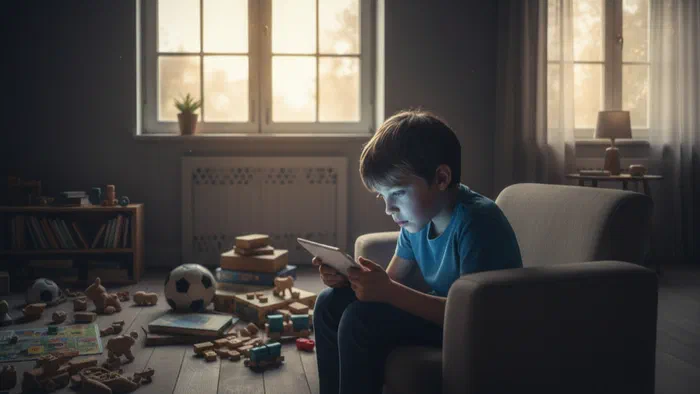
Madison Schools Are Banning Phones. Here's What to Do About the Other 16 Hours.
Last October, Governor Evers signed Assembly Bill 2 into law, making Wisconsin the 36th state to ban phones in classrooms. Every public school district in the state has until July 2026 to enforce it.
But Madison didn't wait. Four schools (East High, West High, Cherokee Heights, and James Wright) already ran a pilot program blocking 30+ social media apps on school WiFi. Students pushed back immediately. Some used VPNs to get around the blocks. Teachers saw the difference anyway.
And Wisconsin isn't alone. California's Phone-Free School Act requires all districts to restrict phones by July 2026. Michigan just signed its own statewide ban on February 10th. At the federal level, the Kids Off Social Media Act would ban accounts for anyone under 13 and block algorithmic feeds for everyone under 17.
This isn't a debate anymore. This is policy. And if you're a parent in Madison, the question isn't whether phones are a problem. Legislators already answered that. The question is: what do you do about the other 16 hours?
School covers 6 hours. Screens fill the rest.

The school phone ban covers roughly 8am to 3pm. That's about a third of a kid's waking day.
What happens after dismissal?
According to the American Academy of Child & Adolescent Psychiatry, children ages 8-18 average over 7 hours of daily screen time. The CDC's 2024 data brief found that about half of all teenagers rack up 4 or more hours of screen time per day. And Lurie Children's Hospital reports that short-form video consumption alone jumped from 1 minute per day in 2020 to 14 minutes per day in 2024 -- a 14x increase in four years.
So legislators are handling the school day. Who's handling 3pm to 9pm?
That's you. And if you feel like you're losing that battle, the research says you probably are—and it also points toward what actually works.
What the research says screen time does to kids' brains

I want to be careful here. Not all screen time is equal. Educational apps, video calls with grandparents, a movie on family night, those aren't the problem. The problem is passive, algorithm-driven content consumed for hours every day, the kind designed to keep your kid swiping.
A 2023 review in Cureus (a peer-reviewed medical journal) compiled findings across dozens of studies. Some of what they found:
- Each additional hour of TV at age 2 correlated with a 7% decrease in classroom participation and a 6% decrease in math proficiency by fourth grade
- Children watching 2+ hours daily showed poorer vocabulary acquisition and more behavioral problems than kids watching an hour or less
- Higher screen time at age 4 predicted lower emotional understanding at age 6
- Media multitasking (switching between apps, tabs, games) impaired working memory, task inhibition, and cognitive switching in adolescents
A systematic review published in the International Journal of Environmental Research and Public Health examined the link between screen time and attention specifically. The conclusion: excessive screen time, particularly fast-paced and interactive media, makes it harder for children to concentrate on less stimulating activities. Like homework. Like conversation. Like sitting in a classroom.
These aren't fringe findings. Researchers in the U.S., Europe, and Asia keep landing on the same conclusions.
And here's the part that should concern every Madison parent: the school phone ban removes screens from 6 hours of the day. The other hours are unregulated. That's where the damage accumulates.
Why "just limit screen time" doesn't work

If you've tried setting screen time rules at home, you already know the gap between policy and reality. You set a timer. The kid negotiates. You're exhausted from work. The phone comes back out.
I hear this from parents at our gym constantly. The problem isn't that they don't know screens are bad. Every parent I talk to already knows. The problem is that there's nothing compelling enough to replace the screen.
Think about it from your kid's perspective. A phone delivers novelty, social connection, and dopamine hits every few seconds. You're asking them to put that down and... do what? Read a book? Go outside? Those are good things, but they can't compete with an algorithm designed by a billion-dollar company to keep your kid scrolling.
You don't beat a phone by removing it. You beat it by replacing it with something better.
What actually competes with a phone

There's a 2021 study published in Frontiers in Pediatrics that caught my attention a while back. Researchers took 49 at-risk adolescent boys, split them into two groups, and put one group through martial arts training twice a week for six months. The martial arts group showed statistically significant improvements in inhibition and set-shifting (two executive functions that screen time erodes) and faster cognitive processing speed compared to the control group doing regular sports.
A separate literature review in Complementary Therapies in Clinical Practice looked at martial arts across multiple populations and found consistent results: better attentional performance in children with ADHD, sharper selective attention in young adults, and measurable gains in impulse control and cognitive flexibility in school-age kids.
The mechanism isn't complicated. Martial arts demand exactly the cognitive functions that screens degrade. Sustained attention. Impulse control. Pattern recognition. Real-time problem solving under physical stress. Brazilian Jiu-Jitsu, specifically, is one long exercise in "pay attention or get pinned."
A phone fragments attention. Training on the mat rebuilds it.
Why BJJ is a non-negotiable phone-off zone

I run a kids BJJ program in Madison, and I'll tell you something every parent notices in the first week: there are no phones on the mat. Not because of a rule (though we have one). Because there's no opportunity. You cannot scroll Instagram while someone is trying to pin you.
BJJ requires 100% of a kid's attention. Not because we yell "pay attention." Because the activity demands it. If you're drilling a guard pass and your mind wanders, your partner sweeps you. If you're rolling and you lose focus for two seconds, you get submitted. The feedback is immediate and physical, not abstract. A kid doesn't need a parent or teacher telling them to focus. The training itself enforces it.
That's different from, say, a painting class or a nature walk. Those are good. But they don't demand attention the way grappling does. They don't grab a kid's brain hard enough to make the phone irrelevant.
Here's what I see happen with new kids, over and over:
Week one, they're fidgety. Their eyes wander. They're used to switching tasks every 30 seconds because that's what their phone trained them to do.
Week three, they're locking in for full drilling rounds. They're remembering techniques from last class. They're asking questions about specific moves.
Month two, parents tell me the kid is calmer at home. Homework battles are shorter. They're sleeping better. They talk about training at dinner.
I'm not claiming BJJ cures screen addiction. But it gives a kid something to care about that isn't on a screen. And for a lot of families in Madison right now, that's exactly the missing piece.
The social piece matters too
One thing the phone ban research doesn't address is what kids lose when phones go away: social connection. For a lot of kids, especially middle schoolers, their phone IS their social life. Group chats, Snapchat streaks, TikTok comments. Take the phone away and they feel isolated. This isolation is a real driver of the youth anxiety epidemic—and why the solution needs to replace the phone with genuine in-person connection, not just remove it.
BJJ handles that without anyone giving a speech about friendship. The structure of training does the work.
Every class, your kid works with a partner. They learn together. They tap each other. They slap hands after every round. Over weeks and months, those training partners become real friends. The kind built on shared sweat and mutual respect, not likes and follows.
A kid who trains three times a week at Journey BJJ spends 3-4 hours in face-to-face social interaction with peers every week. No screens involved. That's more genuine social time than most kids get outside of school.
What Madison parents can actually do
The phone ban is coming. By July 2026, every Wisconsin school district has to have a policy in place. That's a good start. But it only addresses a fraction of the problem.
Here's what I'd suggest, as a coach and as someone who watches kids develop at our gym every week.
Stop treating it as a subtraction problem. Taking the phone away creates a vacuum. Fill it first. An engaging, physically demanding, socially rich activity solves half the screen time problem without a single argument about screen limits.
Pick activities that demand attention, not just participation. A lot of after-school programs let kids coast. BJJ doesn't. Every minute on the mat requires focus because the consequences of zoning out are immediate.
Get them around other kids in person. Your kid needs friendships built on shared effort, not shared memes. Three hours a week of face-to-face training with peers does more for social development than any group chat.
And start before middle school if you can. Screen time statistics get worse every year as kids age. Building habits around physical training early gives them something to anchor to when the phone pressure intensifies in sixth and seventh grade.
If you're curious, come watch a kids class. You'll see a room full of kids, ages 5 through 15, fully engaged, working hard, and not thinking about their phones for an hour. That alone might be worth the trip.
Book a free intro class and give your kid a week to try it. No contracts. No pressure. Just an hour on the mat with other kids who are learning that the best things in life happen when the phone is off.
---
Sources
- Wisconsin Examiner: "Evers signs bills to restrict cell phone use in schools" (October 2025)
- Madison.com: "Madison students required to disconnect from social media apps in pilot program"
- PBS Wisconsin: "As Madison schools attempt to limit social media use, students push back"
- Congress.gov: S.278 Kids Off Social Media Act
- AACAP: "Screen Time and Children"
- CDC Data Brief No. 513: "Screen Time Among Youth" (October 2024)
- Lurie Children's Hospital: "Screen Time Statistics Shaping Parenting in 2025"
- Cureus (2023): "Effects of Excessive Screen Time on Child Development: An Updated Review"
- International Journal of Environmental Research and Public Health (2022): "The Association between Screen Time and Attention in Children: A Systematic Review"
- Frontiers in Pediatrics (2021): "The Effect of Martial Arts Training on Cognitive and Psychological Functions in At-Risk Youths"
- Complementary Therapies in Clinical Practice (2024): "Martial Arts as a Tool for Enhancing Attention and Executive Function"
- Governor of California: "Governor Newsom Signs Phone-Free School Act" (September 2024)
- Michigan Advance: "Whitmer signs off on school cell phone ban" (February 2026)
- Screen time
- School policy
- Madison
- Activity
Ready to Start Your Journey?
Choose the option that works best for you
Call to book: +1 (608) 416-1140