UW-Madison Studied 1,300 Local Kids—The Hidden Anxiety Crisis of 6th Grade
Your 5th grader seems fine. They're doing well in school, have friends, know where everything is. Life is predictable.
Then you start thinking about next year.
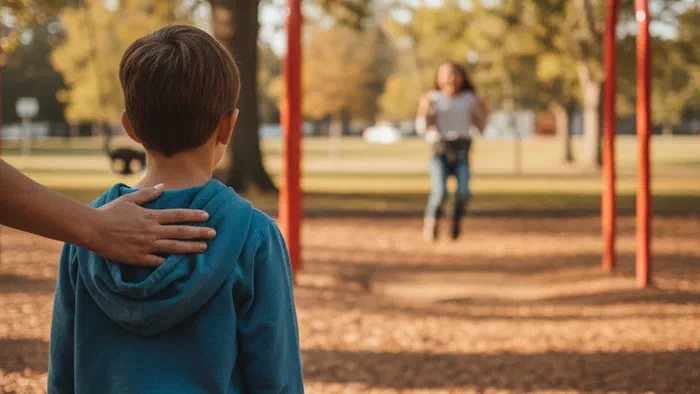
Suddenly, your stomach tightens. You picture them walking into a building with 300 strangers instead of 25 familiar faces. Seven teachers instead of one. Lockers, changing classes, older kids everywhere.
If you're feeling this anxiety, imagine how your child feels—even if they haven't said anything yet.
The Middle School Transition Is a Real Vulnerability Point
This isn't just parental worry. Researchers at the University of Wisconsin-Madison have studied what happens when kids move from elementary to middle school, and the findings are sobering.
A landmark study involving 1,304 sixth graders across all 11 Madison Metropolitan School District middle schools found that this transition creates measurable problems: increased absences, more behavioral incidents, and declining grades. Lead researcher Geoffrey Borman, a professor at UW-Madison's School of Education, documented what many parents intuitively sense—the upheaval of moving to a new school collides badly with "the increased self-awareness, heightened sensitivity to social acceptance and other physical and psychological changes" that young teens already experience.
The numbers tell the story. Students who received simple confidence-building interventions during this transition showed:
- 34% fewer disciplinary incidents
- 12% better attendance
- 18% fewer failing grades
The common thread in successful transitions? Kids who internalized that their struggles were normal and temporary—and who trusted adults enough to ask for help—performed dramatically better.
Why the First Six Weeks Matter So Much
Here's what keeps Madison parents up at night: the early weeks of 6th grade set the trajectory for years to come.
According to the Child Mind Institute, anxiety often peaks during transition times. Kids worry about finding classrooms, making friends, and whether older students will be mean. These fears are reasonable—they're walking into genuine uncertainty.
Dr. Rachel Busman, a clinical psychologist at the Child Mind Institute, recommends parents "express confidence that they're going to be okay, that they will be able to manage it." But here's the challenge: how do you build that confidence before school starts?
You can't practice walking the halls until orientation week. You can't rehearse handling mean comments or navigating lunchroom politics. And you definitely can't simulate what it feels like when your old friend group suddenly wants nothing to do with you.
Or can you?
What BJJ Actually Teaches (It's Not Just Fighting)
Brazilian Jiu-Jitsu creates something rare: a practice environment where kids face genuine challenge, experience discomfort, and learn to push through—without the social stakes of school. Research on youth anxiety and physical activity confirms that structured movement programs are among the most effective interventions available for children.
Research published in the British Journal of Educational Psychology found that a 10-week martial arts training program significantly improved resilience in secondary school students (ages 12-14). The study of 283 students demonstrated that martial arts-based intervention had "a significantly positive effect on developing students' resilience."
A Frontiers in Pediatrics study on martial arts training for at-risk youth found measurable improvements in self-esteem, reduced aggression, and enhanced cognitive function—including better "inhibition and cognitive shifting" (the ability to switch between mental tasks).
Here's the part that matters for middle school: the researchers found that cortisol reactivity during training actually predicted increases in self-esteem. In plain English? The productive stress of martial arts training helps kids develop a healthier stress response for challenging situations later.
Five Ways BJJ Builds Pre-Transition Confidence
1. Skill Mastery Creates Genuine Self-Belief
Your child can't fake their way through Jiu-Jitsu. When they learn a technique and it works, they know they earned it. This is different from participation trophies or grade inflation—it's competence built through practice.
According to a comprehensive review in the Journal of Applied Developmental Psychology, martial arts training produces "higher self-esteem, confidence, and optimism" in practitioners. Advanced practitioners demonstrated higher self-confidence and self-regulation—exactly what kids need walking into middle school.
When your daughter successfully escapes a bigger opponent's hold, she knows something about herself that no bully can take away.
2. Learning to "Fail" Without Falling Apart
In BJJ, we tap out. A lot. Getting submitted isn't shameful—it's information. It means you learned where the gap in your defense was.
This reframes failure completely. Kids who train discover that getting beat by a technique isn't the end of the world. It's the beginning of learning something new.
Middle school will have social "tap outs." Friends who suddenly ignore you. Groups that exclude you. Tests you bomb. Kids who've practiced recovering from setback handle these moments better.
3. Partner-Based Training Creates Stable Friendships
Here's something Madison parents might not consider: your child's elementary school friends are scattering across 12 different middle schools. MMSD registration for 2025-26 opens August 6, with 6th graders starting September 2—and suddenly, the social map resets completely.
BJJ friendships aren't school-dependent. Your child trains with kids from across Madison, building relationships based on shared challenge rather than whose parents live in the same neighborhood. When school friendships get rocky (and they will), your child has a community that stays stable.
4. Physical Confidence Handles the Body Image Problem
The Child Mind Institute's 2025 report found that more than half of children (63%) identify bullying and academic pressure as top concerns. For girls especially, body image anxiety peaks during the middle school years as bodies change and peer comments get cruel.
Kids who train martial arts develop a different relationship with their bodies. They know what their body can do, not just what it looks like. When some 7th grader makes a comment about weight or height, a child who's spent a year learning what their body is capable of has a foundation that comment can't crack.
5. Adult Mentorship Outside the Family
One finding from the UW-Madison research stands out: students who succeeded during the transition "trusted their teachers more and sought help from adults."
BJJ coaches become trusted adults outside the family system. Kids learn that not all adults are trying to control them—some genuinely want to help them grow. This translates directly to better relationships with middle school teachers and counselors.
The Madison Context: Why This Summer Matters
MMSD serves thousands of families navigating this exact transition every year. The district has resources—Behavioral Health in Schools programs, mindfulness rooms—but they kick in after problems appear. Research on what changed for kids during the pandemic helps explain why today's middle schoolers are entering this transition already carrying more anxiety than previous generations did.
What if your child walked into 6th grade already equipped?
Local competitors like MSCR, Wisconsin Youth Company, and the YMCA offer great programs. None specifically market to this transition window. None offer the particular combination of physical challenge, failure recovery, and stable community that BJJ provides.
This summer—right now—is the window. Your child has three months before middle school starts. That's enough time to:
- Build genuine physical confidence through skill mastery
- Practice handling challenge and setback in a safe environment
- Form friendships independent of school social dynamics
- Develop relationships with adult mentors who believe in them
What Actually Happens in a Kids BJJ Class
If you've never watched a Brazilian Jiu-Jitsu class, here's what you'd see:
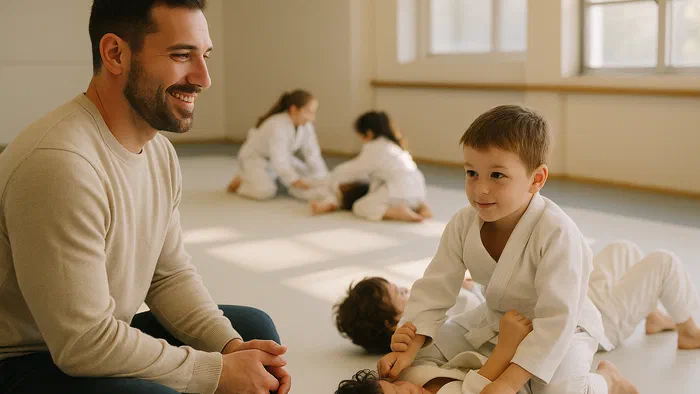
Kids bow onto the mat. They warm up together—movement drills that look more like play than calisthenics. The coach demonstrates a technique, explaining the why behind each detail. Then kids pair up and practice.
The magic happens in the pairing. Your shy daughter works with a partner to solve a physical puzzle. Your energetic son has to control his impulses to make the technique work. Everyone gets frustrated. Everyone eventually figures it out. Everyone helps each other.
At the end, kids sometimes "roll"—controlled sparring where they test what they've learned. They tap out. They try again. They high-five afterward.
It looks like fun because it is fun. The confidence-building happens almost as a side effect.
The Research-Backed Case for Starting Now
Let's sum up what the research actually shows:
From UW-Madison: Kids who believe their struggles are normal and temporary, and who trust adults to help, perform dramatically better during the middle school transition.
From martial arts research: Training improves self-esteem, resilience, self-regulation, and cognitive function. Kids who train develop healthier stress responses.
From child psychology: The best way to reduce anxiety isn't avoidance—it's building genuine competence through facing manageable challenges.
BJJ provides all three: it normalizes struggle (everyone gets submitted), builds trust with adult mentors (coaches), and develops real competence through practice.
Your Next Step
If your child is heading to middle school in Madison this fall, you have a window right now.
Book a free trial class at Journey BJJ.
Your child will experience what training feels like. You'll watch and see if this is the right fit. There's no commitment, no pressure—just an hour where your kid gets to discover what they're capable of.
The 6th grade transition is coming whether you prepare for it or not. The question is: does your child walk in wondering if they can handle it, or knowing they can?
Schedule your free trial class here or call us at (608) 416-1140.
---
Journey BJJ has served Madison families since 2015. Our kids program focuses on confidence, discipline, and anti-bullying skills in a supportive environment.
---
Sources
- Borman, G.D., et al. "Reappraising academic and social adversity improves middle school students' academic achievement, behavior, and well-being." Proceedings of the National Academy of Sciences, 2019. PNAS
- UW-Madison School of Education. "Study shows that easing fears of fitting in can prevent middle school slump." education.wisc.edu
- Child Mind Institute. "Tips for calming middle school anxiety." childmind.org
- Moore, B., Dudley, D., & Woodcock, S. "Well-being warriors: A randomized controlled trial examining the effects of martial arts training on secondary students' resilience." British Journal of Educational Psychology, 2021. Wiley
- Harwood-Gross, A., et al. "The Effect of Martial Arts Training on Cognitive and Psychological Functions in At-Risk Youths." Frontiers in Pediatrics, 2021. Frontiers
- Madison Metropolitan School District. "Registration & Enrollment." madison.k12.wi.us
- Child Mind Institute. "2025 Children's Mental Health Report." childmind.org
- Anxiety
- Middle school
- Confidence
- Research
Ready to Start Your Journey?
Choose the option that works best for you
Call to book: +1 (608) 416-1140