Sydney Sweeney Trained Martial Arts for 6 Years. Here's What Every Woman Should Know Before Trying BJJ.
Sydney Sweeney Trained Martial Arts for 6 Years. Here's What Every Woman Should Know Before Trying BJJ.
She was thirteen years old, walking into a gym that was 99% men.
Not a boutique fitness studio. Not a yoga class. An MMA academy in North Hollywood called Hayastan -- the same gym that produced Ronda Rousey and UFC fighter Karo Parisyan. The kind of place where, according to one of its coaches, "people get knocked out."
Sydney Sweeney trained there two to three times a week for the next five to six years. Grappling. Kickboxing. The only girl on the mat.
Her coach, Arthur Chivichyan -- son of the legendary Gokor Chivichyan -- described her like this: "Sydney was a tough, competitive person. She trained hard, sweat dripping down her face, hair messy, and she didn't care." When new male students showed up to class, "she would beat a lot of them up."
At 18, she entered her first grappling tournament. She competed against all men, one weight class above her own.
She won first place.
"I fought all guys," Sweeney told interviewers. "I would like to think that if shit went down, I might be able to step up."
That's a real quote from a woman who started training before she could drive.

Why This Story Matters (and It's Not Because She's Famous)
Sweeney's story is worth telling because it exposes a lie most women believe about combat sports: that it's not for them.
The intimidation barrier -- the fear of walking into a room full of men, the worry that you'll look stupid, the assumption that you need to be fit or tough before you start -- stops more women than any physical limitation ever could. Research from Bowling Green State University on women in Brazilian Jiu-Jitsu found that the gym environment itself, not the techniques or the physical demands, is the primary barrier that prevents women from starting and staying.
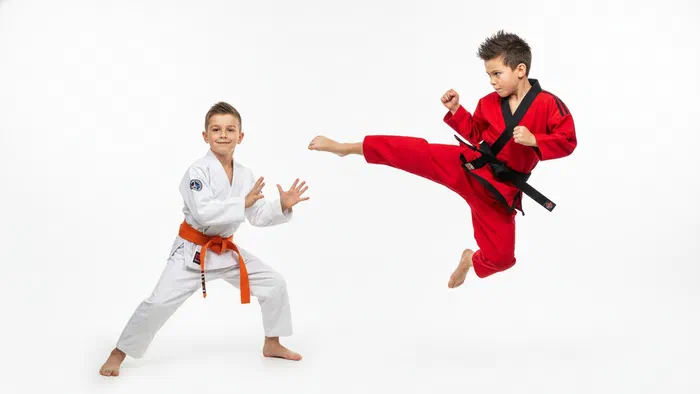
Sweeney's background proves the point. She wasn't an athlete when she walked into Hayastan. Her parents had enrolled her in taekwondo at age five because she was hyperactive. She was a kid who needed somewhere to put her energy. She found a grappling gym and stayed for six years -- not because she was naturally gifted but because the training itself built her into someone tougher than people expected.
As her coach put it: "Sydney is genuine, sweet, caring, intelligent, and tougher than people realize."
She's not training regularly anymore. Acting contracts make it hard -- bruises and broken fingers don't work when you're filming Euphoria or The Handmaid's Tale. But the mentality stayed. When she trained for the upcoming Christy Martin boxing biopic, she spent three and a half months building a "Rocky gym" in her grandmother's garage, gained over 30 pounds, and performed every fight scene without stunt doubles. "My martial arts background was helpful in a mentality sense and for knowing the foundational work of fighting," she said.
That mentality -- the willingness to be uncomfortable, to fail, to show up again -- is exactly what martial arts gives you. And the research backs it up.
What the Science Says About Women and Martial Arts
A 2025 study published in Frontiers in Psychology by Pekel et al. compared 407 female martial arts practitioners to 395 women doing Pilates. The martial artists scored significantly higher on two critical measures of psychological resilience: control (stress management ability) and challenge (the capacity to see adversity as a growth opportunity rather than a threat). These aren't abstract concepts. Control means you stay calm under pressure. Challenge means you walk toward discomfort instead of away from it.
That maps directly to what Sweeney described -- and what we see every week at our academy.
A University of Washington study by researchers Ronald Smith and Julie Weitlauf found something that contradicts what most people assume about combat training for women. Women who completed a martial arts-based self-defense course reported feeling more assertive but less hostile and aggressive. The researchers discovered "ripple effects that impact people's entire lives. People told us they felt more effective as people."
Here's the part that caught my attention: the same university studied women who learned to use handguns for self-protection. Those women achieved high expertise with a firearm. But there was no ripple effect -- no boost in assertiveness, no increase in general confidence. The difference? The researchers concluded that what matters is whether the skills "reside inside of yourself." You can put a gun in a safe. You can't put down what you learned on the mat.
Research on self-defense and self-efficacy from the University of Oregon confirms this pattern across dozens of studies: women who train in physical self-defense report decreased fear and anxiety, increased self-efficacy and self-esteem, and what researchers call "more comfortable and empowered interactions" -- not just in dangerous situations, but in everyday life. Meetings. Conversations. Relationships. The confidence transfers because the training is real.

But Sweeney's Gym Was 99% Men. That's Not Normal Anymore.
Here's where the story shifts from inspiration to practical reality.
Sweeney trained at Hayastan in the early 2010s. The gym was, by her coach's own description, nearly all men. That was typical for combat sports gyms a decade ago. It was also the reason most women never walked through the door.
Modern BJJ academies look different. Female participation in major IBJJF tournaments has increased over 50% since 2015. Women now represent roughly 20% of active BJJ practitioners, up from single digits a decade ago. The 4:1 male-to-female ratio is shrinking every year.
What changed? The gyms changed.
Most reputable BJJ academies now prioritize creating a culture where women thrive. Not as an afterthought. Coaches who pair you with training partners your size. Structured fundamentals programs so you're never thrown to the wolves. A community where women train alongside men as equals -- not as an afterthought. That environment didn't exist for a 13-year-old Sydney Sweeney in North Hollywood. It exists now.
The curriculum changed too. Modern BJJ academies run structured programs -- not "show up and figure it out." You learn techniques in a planned sequence. You drill with a partner before you spar. Your first rolls are with upper belts who know how to control the pace, not brand-new white belts with something to prove.
And the culture shifted. The best academies actively screen for ego and aggression. If someone makes training partners feel unsafe, they don't stay. Period. Building community has been the cornerstone of women's growth in BJJ -- mentorship between experienced and new female practitioners creates a support system that the old-school gyms never prioritized.
The Three Fears (and the Truth About Each)
Every woman who considers BJJ has the same three fears. I know because they tell me.
"I'll be the only woman."
You might be the only woman in a Tuesday night advanced class at some gyms. You won't be at a well-run academy with a culture that welcomes women. At Journey BJJ in Madison, women train in every class. Our coaches pair you with appropriate training partners, and the women who already train here will make you feel at home from day one.
"I need to get in shape first."
This is the most common excuse, and it's backwards. You don't get in shape to start BJJ. You start BJJ to get in shape. Sweeney was a hyperactive kid, not a conditioned athlete, when she walked into Hayastan. The training builds the fitness. If you wait until you feel "ready," you'll wait forever. Nobody feels ready.
"I'll get hurt."

BJJ has lower injury rates than most team sports. There are no punches, no kicks, no head trauma risks. You train at your own pace. You tap when you need to -- and your partner stops immediately. That's the rule, and good gyms enforce it without exception. The American Academy of Pediatrics has noted that grappling arts carry significantly lower injury rates than striking sports, particularly for head trauma. Bruises happen. Broken bones are rare. Concussions are almost unheard of.
What Sydney Sweeney's Mom Did Right
Sweeney's parents made a decision when she was five: put her in martial arts. At 12, they put her in a grappling gym. They drove her to training two to three times a week for years. They didn't wait for her to ask. They didn't worry that the gym was too rough or too male. They saw what the training was doing for their daughter and they kept showing up.
That choice gave Sydney Sweeney something she still carries -- not the techniques (she admits boxing and grappling are "quite different"), but the mentality. The willingness to be the only woman in the room. The refusal to quit when it gets hard. The quiet confidence that comes from knowing you can handle yourself.
You don't need to train at a 99% male MMA gym to get that. You don't need to compete against men a weight class up. You don't need six years.
You need one class.

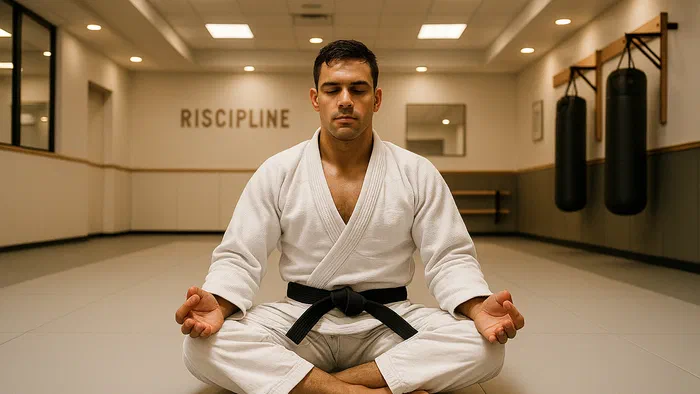
Book a trial class at Journey BJJ. We're in Madison, WI, and we'd love to show you what this training actually looks like -- not on TV, not on Instagram, but on the mat.
Sydney Sweeney's mom drove her to her first class. You just need to book one.
Sources
- Bowling Green State University — Women in Brazilian Jiu-Jitsu: Gym Environment as Barrier to Entry, Journal of Applied Kinesiology (JADE)
- Pekel et al. — Psychological Resilience in Female Martial Arts Practitioners vs. Pilates, Frontiers in Psychology (2025)
- Smith & Weitlauf — Self-Defense Training and Assertiveness in Women, University of Washington (1997)
- University of Oregon — Research on Self-Defense and Self-Efficacy in Women
- Girls in Gis — The Evolution of Female BJJ Competitors: IBJJF Participation Data
- Gaidama — Breaking Barriers: The Rise of Women in Jiu-Jitsu
- American Academy of Pediatrics — Medical Coverage of Youth Sports: Injury Rates in Grappling vs. Striking Arts, Pediatrics (2016)
- Women
- Confidence
- Self defense
- Empowerment
Ready to Start Your Journey?
Choose the option that works best for you
Call to book: +1 (608) 416-1140