2025 Research: Why Martial Arts Works for ADHD Kids
You've tried the apps. The reward charts. The timers. The fidget spinners sitting in a drawer somewhere, gathering dust alongside the promises they made.
And still, every morning feels like pushing a boulder uphill. Getting dressed. Eating breakfast. Finding the backpack. Staying on task at school. Not talking out of turn. Coming home without a note from the teacher.
If you're raising a child with ADHD, you don't need another lecture about consistency. You need something that actually works.
Here's what researchers just discovered: when they compared every type of exercise head-to-head for improving focus in children with ADHD, martial arts came out on top. Not running. Not swimming. Not team sports. Martial arts.
And the gap wasn't close.
What the Research Actually Says

Let's get specific, because vague claims help no one.
A 2025 network meta-analysis published in Frontiers in Psychiatry examined 20 studies involving 1,450 children and adolescents with ADHD. Researchers used a statistical method called SUCRA (Surface Under the Cumulative Ranking Area) to rank different exercise interventions for improving inhibitory control. That's the brain's ability to stop, think, and not act on every impulse.
Taekwondo scored 87.1% on the SUCRA ranking, making it the most effective exercise modality tested. For context, a SUCRA score represents the probability that a treatment ranks first. The researchers concluded with a specific prescription: moderate-intensity martial arts training, 70 minutes per session, twice weekly, for at least 20 weeks.
A separate 2023 meta-analysis in PLoS ONE looked at 24 studies with 914 participants and found significant improvements across all three core executive functions in ADHD:
- Inhibitory control: Effect size of -0.50 (the ability to stop and think)
- Working memory: Effect size of -0.50 (holding information in mind while using it)
- Cognitive flexibility: Effect size of -0.45 (switching between tasks and ideas)
Those effect sizes matter. In clinical research, anything above 0.30 is considered meaningful. These numbers rival medication in some domains.
The Framework That Explains Everything

Here's the concept that ties all this research together, and it's one most parents have never heard: open motor skills versus closed motor skills.
Closed motor skills are predictable. Running on a treadmill. Swimming laps. Shooting free throws into an empty basket. Your child knows exactly what comes next, and the environment stays constant. The brain can go on autopilot.
Open motor skills require real-time adaptation. The environment changes. Opponents move. Decisions happen in milliseconds. You cannot zone out because the situation demands constant attention.
The PLoS ONE meta-analysis found that open motor skill activities significantly outperformed closed motor skill activities for improving executive function. Activities like martial arts, table tennis, and dynamic sports produced better results across all three executive function domains.
Why? Because ADHD brains struggle with sustained attention to boring, repetitive tasks. But give them something that demands engagement, and the circuitry lights up. Every technique requires focus. Every partner interaction demands reading body language. Every roll presents problems that need solving now, not later.
This is why martial arts works when running doesn't.
Why BJJ Takes This Even Further

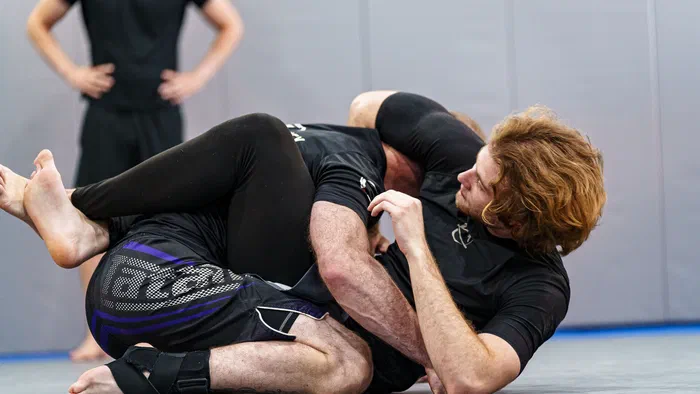
The studies above tested Taekwondo specifically—but BJJ shares the same open motor skill characteristics that drive these benefits. In fact, BJJ may amplify them.
Brazilian Jiu-Jitsu is essentially open motor skills turned up to eleven.
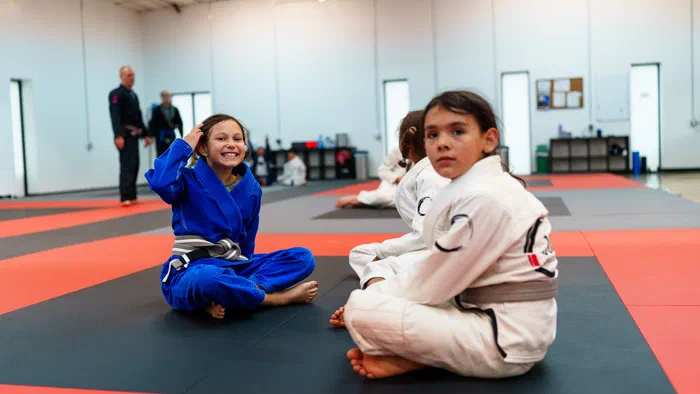
Consider what happens in a typical kids BJJ class at Journey BJJ:
Constant problem-solving. Your child learns a technique, then immediately applies it against a resisting partner who's trying to do the same thing. There's no rote repetition. Every situation differs.
Immediate feedback loops. Did the sweep work? You know in two seconds, not two weeks. ADHD brains crave this rapid feedback. The technique either succeeds or it doesn't, and you adjust immediately.
Physical engagement channels excess energy. All that motor restlessness that makes sitting still impossible? It has somewhere productive to go.
Structured progression with clear rewards. The belt system provides external scaffolding that ADHD brains often lack internally. Stripes and belt promotions create measurable milestones. Your child knows exactly what they're working toward.
Delayed gratification training. Unlike video games that deliver instant rewards, BJJ requires months of practice before techniques click. This gradually strengthens the very neural pathways that ADHD weakens.
A randomized controlled trial published in PMC studied 40 adolescents with ADHD over 18 months. The taekwondo group showed massive improvements in attention measures, with effect sizes reaching 2.78 on visual attention tests. The researchers specifically recommended that "practitioners should implement martial art programs" for ADHD management.
What This Looks Like in Practice

At Journey BJJ in Madison, our kids program runs 45-minute classes designed with attention management in mind.
Classes begin with a structured warm-up that channels initial energy. Instructors demonstrate techniques in short bursts with immediate partner practice. Activities rotate frequently enough to maintain engagement but consistently enough to build skills over time.
The environment matters too. Our mats are a phone-free zone. There are no screens competing for attention, no notifications, no digital distractions. Just physical engagement with coaches and training partners who become friends.
Parents regularly tell us their kids ask to come to class. The same child who fights every structured activity can't wait for BJJ nights. We see similar results with kids whose social development was disrupted during the pandemic—the mat becomes the environment where their brain finally clicks into gear. That's not magic. That's matching the activity to how the ADHD brain actually works.
Common Parent Questions

Will my child get hurt?
Kids BJJ emphasizes control, not competition. Children learn to tap out before any discomfort, and training partners respect those signals immediately. The injury rate in recreational martial arts is lower than in soccer, basketball, and football.
What if my child can't focus long enough to learn techniques?
Instructors break techniques into small pieces with immediate practice. The constantly shifting activities maintain attention naturally. We're not asking kids to sit still and listen for 45 minutes.
Should I tell the instructors about the ADHD diagnosis?
Yes. Our coaches adapt their approach based on each child's needs. Many kids on the spectrum or with ADHD thrive in our program because instructors know how to structure the experience appropriately.
How long before we see changes at home or school?
Research suggests meaningful improvements appear after 20 weeks of consistent training. Some parents report changes in focus and self-regulation within the first month. Every child differs, but the neurological benefits compound over time.
Is BJJ better than medication?
We're not qualified to give medical advice, and we'd never suggest replacing any treatment your doctor recommends. Many families find martial arts works alongside existing interventions. Some find it helps reduce medication needs over time. Work with your healthcare provider on those decisions.
The Bigger Picture
ADHD isn't a character flaw. It's a difference in brain wiring that makes certain environments unbearable and others electrifying. Research also shows that physical activity has a measurable impact on anxiety and mental health in young people—often the same kids struggling most with ADHD symptoms.
Traditional school asks children to sit still, stay quiet, and focus on abstract information for hours. That's asking an ADHD brain to do precisely what it's worst at.
Martial arts asks children to move, engage, solve problems in real-time, and build skills through their bodies. That's asking an ADHD brain to do what it's built for.
The research confirms what practitioners have observed for decades: martial arts changes behavior, improves focus, and builds executive function. Now we understand why.
See If It's Right for Your Child
Reading about research is one thing. Watching your child experience it is another.
Our 2-week intro program lets you see how your child responds to BJJ training with no long-term commitment. You'll watch them engage with partners, solve problems on the mat, and channel their energy into something productive.
Your child has spent years adapting to environments that don't fit how their brain works. Maybe it's time to try an environment designed to work with it.
Sources
- Adhd
- Executive function
- Research
- Focus
Ready to Start Your Journey?
Choose the option that works best for you
Call to book: +1 (608) 416-1140