Youth Sports Got Expensive and Mean. There's a Sport Where Competition Is Optional.
It’s a Saturday morning at a youth basketball game in Madison. A dad two rows behind you is shouting at a 16-year-old kid in a striped shirt. He calls the kid a name you would not say in front of your own children. The ref keeps his face neutral. Your kid is on the bench, watching.
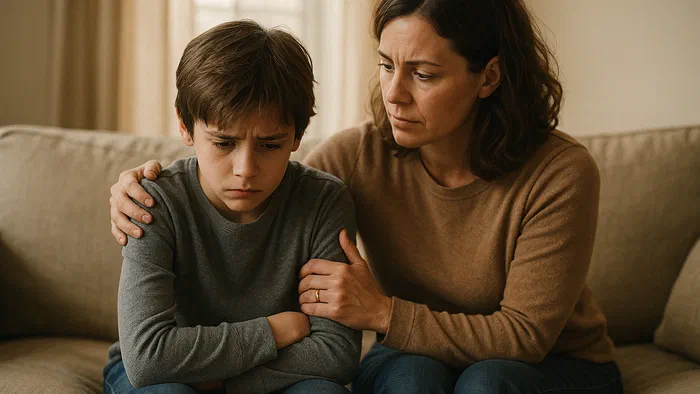
You came here for a fun morning. You stayed for the score. Now you are watching your eight-year-old learn what a grown man sounds like when he wants to win badly enough.
If this scene feels familiar, you are not imagining it. The data backs you up. But the rage is the symptom, not the disease. The deeper story is a youth sports system that’s been quietly turned into a business. And the most useful answer to it might be a sport where your kid can train for years, build real confidence, and never enter a single tournament.
The data says it really has gotten worse

The National Association of Sports Officials runs the largest survey of refs and umpires in the country. In their most recent comprehensive officiating survey , 35,813 officials weighed in. Almost 69% said sportsmanship is worse than it used to be. In 2017, that number was 57%. The jump is nearly 12 points in six years.
It gets uglier. More than half of officials say they have feared for their safety. About 1 in 8 have been physically assaulted. When asked who is causing the problem, 39% pointed at parents. Another 30% pointed at coaches.
This is not a vibe. This is the people on the field telling us what they see.
A district leader in Louisville, Kentucky put it plainly to Education Week in February . Dr. April Brooks, the athletic director for Jefferson County Public Schools, said:
“I would say there’s a lot more disgruntled families than what I remember as an athlete.”
“I also think social media makes people think they need to have a voice about everything.”
Her district now runs a sportsmanship contract for student-athletes, asks parents to wait 24 hours before any complaint meeting, and walks athletic directors through monthly scenario drills. That is the level of structure adults now need to behave themselves at kids’ games.
Some recent incidents that aren’t outliers

This is not a problem of one bad weekend.
In January, the Arizona Athletic Grounds hosted a youth flag football tournament in Mesa. A fight broke out. About 100 people piled in. It took 70 police officers from four agencies, working for 45 minutes, to break it up. The kids on the field were watching. Local reporters wrote it up as part of a broader pattern.
In February, a high school basketball playoff in San Bernardino ended in a brawl that pulled in players, coaches, parents, and fans. Slate covered it as part of a piece on how everyday parents end up in fights at their own children’s games.
The Mesa story isn’t a fluke. It’s the new normal that Wisconsin’s ejection-course rule (more on that below) was written to address.
The real story: youth sports got professionalized

Here’s where most of these conversations stop. People look at the rage and the brawls and ask, “Why are parents so mad?” That misses the deeper question. Why is the pressure on a Saturday morning game so high in the first place?
The American Academy of Pediatrics published an updated clinical report in 2024 on overuse injuries and burnout in youth sports. The doctors named the cause directly. They wrote that the “professionalization of youth sports is widely considered responsible for high volumes of training and pressure to specialize in a single sport.”
That sentence is the whole story.
Their fix is simple. Take a day or two off every week. Take two or three months off every year. Almost no pay-to-play youth sport allows that anymore. Travel soccer runs 11 months of the year. Club volleyball runs winter, spring, and summer. Youth basketball pours into AAU as soon as the school season ends. The kid who tries to take a season off loses their spot on the team they tried out for the year before.
The same report points to single-sport specialization as a key driver of overuse injuries and burnout. The AAP and most pediatric sports medicine bodies recommend kids hold off on specializing in one sport until their mid-teens. Travel-team culture pushes kids to specialize years earlier than that, sometimes by age 9 or 10. The gap between what doctors recommend and what the system rewards is large.
The Aspen Institute’s 2025 State of Play report puts a price tag on it. Youth sports costs are up 46% since 2019. Participation among the wealthiest families is climbing. Participation among the poorest is dropping. Pay-to-play has turned weekend games into investments. When you’ve spent that much money, the cost of registration alone becomes a reason to shout at the ref.
The rage at the game is downstream. The system above the rage is the cause.
The Wisconsin rule most Madison parents don’t know about

Here is the part that surprised me when I dug into it. If a spectator gets ejected from a Wisconsin high school sports event, they have to complete a free sportsmanship course before they can attend another home game. It lives inside the WIAA Sportsmanship Code of Conduct .
A class. For adults. So they can sit in the stands again.
It exists because the state needed it to exist. The fact that almost no parent in Madison has heard of it tells you everything about how rarely we talk about this stuff out loud. Wisconsin built a remediation course for adults at kids’ games. That should make us all stop for a second.
What you actually want for your kid

Strip away the noise. What do most Madison parents actually want from their kid’s activity?
You want them to move. You want them to make friends. You want them to learn how to lose a hard thing and come back the next day. You want them to feel okay in their body. You want them to handle stress without melting down.
You do not want them watching a grown man scream at a teenager in a striped shirt. You do not want a 46-percent-higher registration bill arriving with a year-round commitment locked in.
This is where Brazilian Jiu-Jitsu has a quiet advantage most parents miss. It’s not bigger. It’s not louder. It’s not on TV every weekend. It’s a sport you can train for years and never enter a single tournament.
The sport you can train for years without ever entering a tournament

At Journey BJJ, kids can train for years and never compete. Tournaments exist for the kids who want them. They are not the path.
No tryouts. No cuts. No recruiting pressure. No off-season. There’s no team van to load at 6 a.m. on a Saturday in February. The belt or stripe your kid earns is earned in the gym, on Tuesdays and Thursdays after school, through skill development the coach can see.
BJJ also plays well alongside whatever else your kid loves. Kids in our gym also do soccer, swim team, piano, theater, math club. Two sessions a week is fine. Three is great. If you can only do one for a stretch, that works too. The AAP recommendation, a day or two off every week and a few months off every year, is built into how BJJ is trained recreationally. It isn’t bolted on. It’s the default.
The development happens inside the training itself. Physical literacy, body control, balance, coordination, resilience, focus, social skills, the confidence that comes from being able to hold your own with another person. The trophy isn’t the point. The training is the point.
That last sentence sounds like a poster. It isn’t. There’s a specific mechanic in every BJJ class that makes it true.
How the training itself teaches kids to lose, every week

Every BJJ class ends in live practice. Two kids work a position. One of them eventually finds the better angle and applies a controlled submission. The other kid taps the mat twice. That tap means “good catch, reset.” Then they bow, shake hands, and start over. The kid who tapped does not get yelled at. The kid who tapped is the one who just learned something.
Tapping is not losing. Tapping is the only way you find out what you don’t know. In Brazilian Jiu-Jitsu, the kid who taps the most usually improves the fastest, because every tap is a free piece of feedback.
John Danaher, one of the most respected coaches in the sport, puts it this way :
“Training is about skill development, not about winning or losing.”
“Getting tapped makes you aware of your lack of skill and, more often than not, leads to you tapping out. Which is all good, of course, as training is for improvement.”
Renzo Gracie says it shorter:
“Even if you don’t win you learn. So there’s no losing. You win the fight or you learn.”
Carlos Gracie said it shortest of all. In Jiu-Jitsu, there is no losing. Only learning.
This is the actual mechanic of every class. A tournament isn’t required to deliver it. The tap is the lesson. Kids get 30 or 40 reps of losing-and-recovering per class, every class, with a coach watching and a partner who slaps hands at the end. That’s a curriculum no medal can give them.
A 2025 qualitative study in the Journal of Community and Applied Social Psychology looked at adults who had trained in martial arts for years and asked them what changed. The most common answer was a theme the researchers called “self-confrontation”: the practice of running into your own limits, week after week, in a way you can survive. The people they interviewed described more resilience, more confidence, and more connection. The training itself was the therapy.
The same idea applies to kids. The lesson that you can lose a round, slap hands with the person who beat you, and come back next class is exactly the lesson a professionalized, trophy-driven youth sports system is forgetting how to teach.
The fair objections, answered honestly

I want to push back on the easy version of this argument before someone else does.
“Aren’t we just coddling kids by telling them losing is fine?” No. The opposite. A travel-team kid who only wins is not building resilience. They’re building expectations. A BJJ kid loses dozens of small rounds every week and bows to the kid who beat them. They are doing reps of recovering. By the time something real goes wrong in their life, recovering is a habit, not a panic.
“Don’t all youth sports work this way?” Not really. Most have a competition track built into them. Soccer has games. Basketball has leagues. Wrestling has tournaments. The training and the season exist to feed the competition. BJJ flips that. Belts and stripes are earned through skill development at the gym, not through medal counts. The closest comparison is something like piano: you can study seriously for years without ever performing in a recital. Recitals exist if you want them. They aren’t the point. For families weighing the BJJ vs. wrestling tradeoff specifically, we wrote about the football-to-wrestling shift happening across the country earlier this year.
“Doesn’t BJJ have ego problems too?” Yes. There are gyms with bad culture, kids who tap late, and adult tournaments with their own sideline drama. I won’t pretend that part doesn’t exist. Some BJJ gyms over-index on competition trophies and end up dragging the same toxic energy from a professionalized soccer league onto a mat. The sport’s children’s rules are explicitly built against that pull. The International Brazilian Jiu-Jitsu Federation’s kids’ rules ban slamming with zero tolerance and an immediate disqualification. Leg locks, guillotines, and high-risk submissions are not allowed in kids’ brackets until they’re old enough to understand them. That doesn’t make every gym good. It means the sport has put guardrails where wrestling, football, and youth basketball mostly have not. Choosing a gym that coaches development over trophies matters. We wrote a guide on the difference between sport BJJ and self-defense BJJ and how to pick a kids’ gym in Madison .
A small Tuesday at the gym

Here’s a moment that happened at our gym a few weeks ago that I keep thinking about.
A boy who’d been training maybe four months caught a kid two stripes ahead of him in a triangle. Clean control. The older kid tapped. The little one didn’t celebrate. He let go, sat up, said “good roll,” and slapped hands. Then the older kid showed him a small mistake in the technique so he could clean it up next time.
Nobody screamed. Nobody filmed it. Nobody posted about it. No tournament bracket was on the line. The two of them just helped each other get a little better and went back in line for the next round.
That’s the curriculum. That’s the whole thing.
Three things you can do this week, even if Journey isn’t your answer

If this piece leaves you wanting to change one thing this week, here are three that work whether or not your kid ever trains with us.
- Watch your own sideline this Saturday. Not your kid. Yourself. Notice if you tighten up when the score moves. Notice what you mutter under your breath. Most of the change starts there.
- Look up the WIAA Sportsmanship Code and read it with your kid. Not as a punishment. As information. The fact that there’s a state-mandated course for ejected spectators is worth a five-minute conversation at dinner.
- Find one activity where the training itself is the goal. It doesn’t have to be BJJ. It could be a music lesson, a chess club, a debate team, a swim group with no meets. The point is that your child gets weekly reps in a setting where they make mistakes, get clear feedback, and come back next week, with no tournament chasing them.
Where Journey BJJ fits

We coach kids in Madison, Wisconsin, in a way that takes this seriously. Competition is optional. Training is the goal. Kids can train with us for years and never enter a tournament, and we’ll keep promoting them through stripes and belts based on what they show in the gym. No tryouts. No cuts. No off-season. No recruiting pressure.
BJJ also plays well alongside whatever else your kid already loves. Soccer, music, swim team, math club, theater. Two sessions a week, three if you can. If you need a couple months off in summer for camp, that’s fine. The mat will still be there in September. If you want the longer read, here’s why kids who train BJJ tend to stay with it and our full guide to kids martial arts in Madison .
If you want to see what a calm, focused kids’ BJJ class looks like in real life, we run a 2-week intro for $49 that includes a free uniform. Pick a start week here and bring your kid to a class.
You don’t need a brawl on a Saturday morning to be the reason you make a change. You can just decide your kid deserves a quieter room to grow up in, without the travel-team bill attached.
- Youth sports
- Parenting
- Professionalization
- Bjj for kids
- Madison wi
- Character development
Ready to Start Your Journey?
Choose the option that works best for you
Call to book: +1 (608) 416-1140