What "Physical Literacy" Actually Means — and How to Use It to Pick a Kids' Activity That Sticks
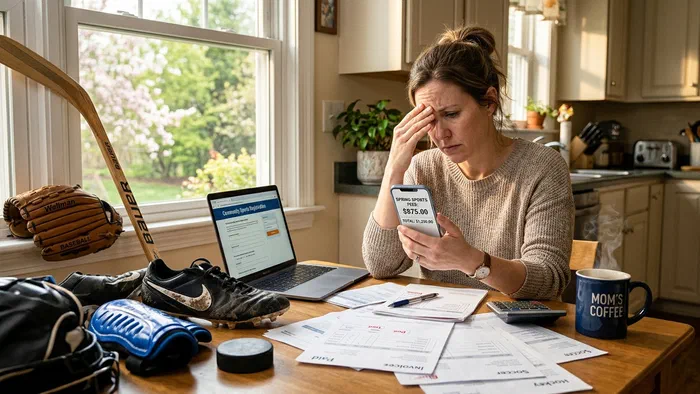
School let out last week. You’re standing at a sign-up table with three brochures fanned out in your hand: soccer, a coding camp, and the martial arts place a friend keeps texting you about.
Your kid is tugging your sleeve, asking if there’s a snack bar. And you have about four minutes to pick how the whole summer goes.
Here’s the question hiding under that clipboard. Not “which one is best.” The real question is: which one makes my kid want to keep moving, this summer and ten years from now?
There’s actually a name for what you’re shopping for. It’s called physical literacy. Most parents have never heard the term. Once you have it, you can’t unsee it, and it makes the clipboard a lot easier.
What physical literacy actually means

Think about reading literacy for a second. A literate kid isn’t the fastest reader in class. A literate kid has the skill to read, the confidence to pick up a hard book, and the desire to keep reading for fun.
Skill, confidence, desire. That’s the whole thing.
Physical literacy is the exact same idea, but for moving your body. Same three legs underneath, and they grow out of two parts.
The first part is athleticism: the body’s hardware. How well a kid moves, balances, reacts, and keeps going when they’re tired. Here’s the thing most parents miss. “Athlete” is not a label saved for the gifted few or the varsity team. Athleticism is hardware every kid can build, because it’s trainable. More kids should think of themselves as athletes. So should more grown-ups. It’s a useful way to see yourself.
The second part is the skill that runs on top of that hardware: knowing what to do, reading the situation, making the right call. Call it the software. A kid can be a great mover and still not know when to pass the ball. Great training builds both.
So here’s the sharp version. A physically literate kid is both athletic (the hardware) and skillful (the software). Not the best on the field, not the fastest. Just athletic enough and skilled enough to feel good about moving and want to keep doing it.

And where does the confidence come from? Not a pep talk. It comes from proof. A kid does the thing, sees it work, and starts to believe. Real skill builds real confidence. We’ll see the research in a minute. But you already know it in your gut: a kid who can do something feels good about doing it.
The idea started with a British scholar named Margaret Whitehead. Back in 2015 the Aspen Institute built the first big U.S. model around it. So this isn’t a fad word. It’s becoming how schools and coaches everywhere think about kids and movement.
Why this is the long game, not the summer game

Here’s the part that made me sit up.
How well a kid moves at age 8 helps predict whether they’re still active at age 18. Not their talent. Their basic movement skills.
A 2015 review in Sports Medicine pulled together a stack of long-term studies and found the same thing over and over. Kids who build solid movement skills early tend to stay active through their teens and into adulthood. The window that matters most is roughly ages 6 to 11.
There’s a reason, and it’s almost embarrassingly simple. A 2008 paper in the journal Quest by researcher David Stodden described it as a loop that feeds itself.
A kid who can move well plays more. Playing more makes them feel capable. Feeling capable keeps them playing. The skill and the confidence pull each other up, year after year.
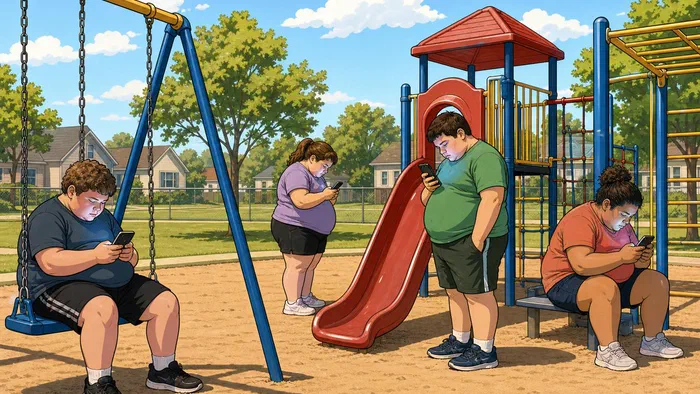
The loop runs the other way too. A kid who feels clumsy plays less, falls further behind, and feels worse about it. And they quietly opt out.
An Australian study published in 2008 found the belief is the hinge. Kids with better movement skills as children believed they were good at sports. That belief, not the raw skill alone, was what kept them active as teenagers. This is the proof loop: real skill gives a kid evidence they’re good, that evidence becomes confidence, and confidence drives them to keep showing up.
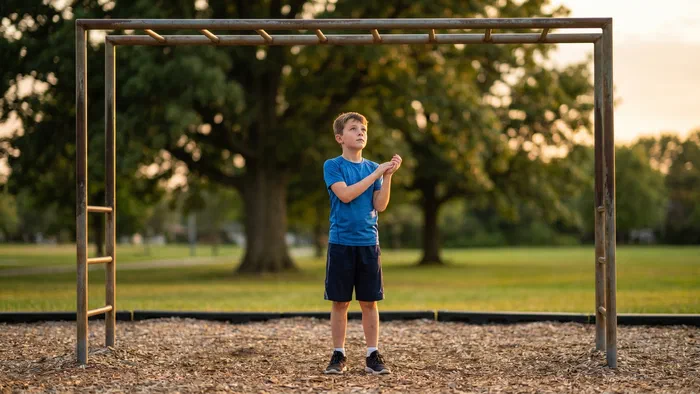
Now here’s the emotional gut-punch. Somewhere around age 9, most kids lock in a story about whether they’re “athletic” or “not athletic.” And that story tends to stick for life. Here’s why that’s heartbreaking. Athleticism is hardware they can still build. A 9-year-old who decides “I’m just not a sports kid” is quitting on something trainable. The quitting is what locks it in, not the lack of talent. The flip is just as powerful. A kid who learns to see themselves as an athlete, because they have proof they’re getting better, never writes that story in the first place.
That’s why the summer in front of you matters more than it looks. You’re not just filling July. You may be helping your kid write that story while it’s still being written.
It also explains a stat that should bother every parent. As kids move through the early teen years, their daily activity falls off a cliff. A 2025 review in Frontiers in Public Health put it at roughly 35 minutes a day less real, sweat-on-your-brow movement between ages 11 and 14. The kids who stay active through that drop are usually the ones who felt capable before it hit.
If you want the fuller, more sobering picture of how kids’ movement has slipped over the generations, we wrote about the measurable decline in kids’ motor skills separately. This post is about what you can do at the sign-up table.
The three kinds of moving every kid needs

Movement isn’t one thing. Researchers split it into three buckets, and a kid needs all three.
The first is moving through space: running, jumping, hopping, skipping. The second is staying in control: balancing, twisting, landing without face-planting, falling without getting hurt. The third is handling objects: throwing, catching, kicking, striking a ball.
Most activities are great at one bucket and skip the others. Soccer is heavy on running and kicking, light on balance and falling. Gymnastics is huge on balance, light on throwing and catching. None of that is a problem if you know which bucket an activity fills, so you can cover the others somewhere else.
Programs that touch more than one bucket tend to hold kids longer than one-trick programs. Variety keeps it interesting, and interest keeps them coming back.
The 6-point checklist you can use this week

Here’s the practical part. Use this on any activity: a sport, a camp, a class, even the swim team at the pool. Watch one session, or ask the coach five questions. You’ll know fast whether it’s building physical literacy or just killing an hour.
1. Does it practice more than one kind of movement? A program that only does one skill, over and over, is a red flag. A good one mixes it up.
2. Are the kids actually moving most of the time? Go watch, and count how long your kid stands in a line waiting for a turn. Long lines are wasted minutes. The best programs keep every kid busy almost the whole time.
3. Does anyone get pulled out for losing? Elimination games, where the kid who messes up sits down and watches, are sneaky poison. The kid who needs the practice most gets the least. Look for programs where nobody gets benched for being behind.
4. Is the coach focused on getting better, or on beating people? “Did you improve today?” beats “Did you win?” every time. A coach who measures progress against the kid’s own last week keeps that confidence loop spinning.
5. Is it the right amount of hard? Too easy and they’re bored. Too hard and they quit. The sweet spot is a kid who leaves saying “that was fun” or “I learned something,” not “I’m bad at this.”
6. Is it actually fun? This isn’t soft. Fun is the engine of the whole thing: it makes them come back, coming back means practice, practice builds skill, and skill builds the kid who’s still active at 30. Cut the fun and the whole chain breaks.
One honest caveat. The best mix for a kid isn’t all structured class or all free play. It’s a blend. A little coaching plus a lot of unstructured backyard time beats either one alone.
So don’t feel like every minute has to be scheduled. Kicking a ball around the yard with no coach counts. It counts a lot.
Where Brazilian Jiu-Jitsu fits, honestly

I run a kids BJJ program here in Madison , so you’d expect me to say BJJ wins on every line of that checklist. It doesn’t, and I’d rather you trust me than oversell it.
Run BJJ through the three buckets and you get an honest picture.
Balance, body control, and falling safely? This is BJJ’s strongest bucket by a mile. Grappling is built on staying balanced while someone tries to take your balance away. Kids learn to fall, roll, and get back up without panicking. These are the exact skills most kids skip, and the ones that protect them on a bike, a playground, or an icy Madison sidewalk.
Running and jumping? Partial. There’s footwork and scrambling, but no sprinting and no big jumps.
Throwing, catching, kicking? Basically none. BJJ is grappling. If you want your kid throwing and catching, that’s baseball, soccer, or the backyard.
So here’s the straight answer. BJJ is excellent at the movements kids need most but practice least: balance, control, falling. It is not a complete movement diet on its own. A kid who loves BJJ still benefits from running-and-throwing play to round out the other buckets, so the two fit together rather than compete.
Where the checklist does favor a class like ours: kids spend the session drilling and rolling with a partner instead of standing in a line. And progress is measured by belt rank earned over time, not by who won today. Belts get awarded when a kid reaches the skill, by the instructor, so there’s no test fee and no “you lose, sit down.”
That setup is exactly what keeps the confidence loop running for the kid who isn’t a natural. And in eight years of running the kids’ program, we’ve had zero serious injuries. Almost never more than a bruise.
If you’re weighing martial arts specifically, a few more reads might help. There’s the five core benefits kids get from training and why some parents start their kids in BJJ young . There’s also why kids who train BJJ tend to stick with it when most kids quit organized sports by 13.
One more honest note for parents. None of this requires competition, and most kids who train get every one of these benefits without ever stepping on a tournament mat. The skill, the confidence, the staying-active part all comes from regular class. Competing is optional, and plenty of great students never do.
Three things you can do this week

You don’t need to overhaul the summer. Try these.
First, run the 6-point checklist against whatever your kid already does. Soccer, dance, the camp they’re signed up for. You might find it’s great. You might find a gap.
Second, go watch one full session of something, and just time how much your kid actually moves. Bring your phone. Count the standing-around minutes. That one number tells you more than any brochure.
Third, pick one activity that fills a bucket your kid’s current thing skips. If they play soccer all summer, they’re covered on running and kicking but light on balance and falling, so something like grappling or gymnastics rounds it out. If they do a balance-heavy activity, get them throwing and catching.
That’s it. Skill, confidence, desire. Cover the buckets, keep it fun, and you’re playing the long game right.
Want to see it for yourself?
The honest way to judge whether an activity builds physical literacy is the one I gave you above: watch a class, and ask the coach how they run it. So if our kids’ program is on your clipboard, come do exactly that — free.
Meet The Coach (FREE) — meet our kids’ instructors, tour our safe facility, learn about age-appropriate classes, and get all your questions answered. No pressure, no pitch. Bring the checklist and put us to the test.
- Kids bjj
- Physical literacy
- Madison
- Youth sports
- Kids activities
Ready to Start Your Journey?
Choose the option that works best for you
Call to book: +1 (608) 416-1140