Wisconsin Just Named Exercise a Mental Health Tool. Here's Why BJJ Fits.
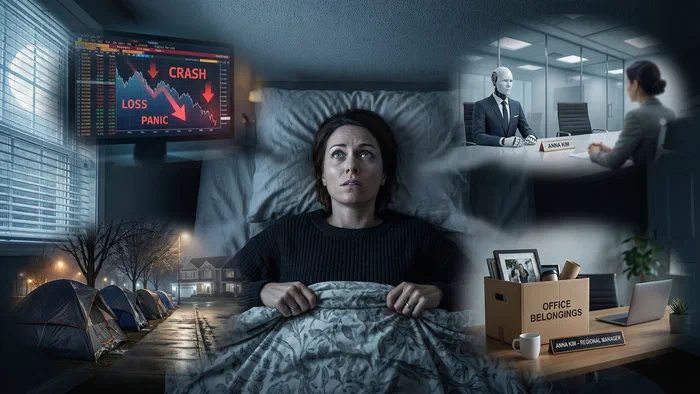
It’s 9:47 PM on a Wednesday. You meant to be asleep an hour ago. You’re brushing your teeth and you know there’s something you were supposed to do tonight, but you can’t pull it back. You’re spread thin in six directions and none of them are done.
This just in: Wisconsin put exercise on the official mental health list.
On May 5, 2026, Governor Tony Evers’ office released the Wisconsin Mental Health Action Plan . The plan came out of the Governor’s Interagency Council on Mental Health. They spent the past year on five regional listening sessions, more than 1,200 survey responses, and 16 partner meetings. It covers every age and every region. It leans hard into prevention — what you do before a crisis, not after. The plan names six things that protect mental health: exercise, sleep, food, stress management, time outside, and social connections.

Exercise is on that list. Not as fitness. As prevention.
This didn’t come out of nowhere. Wisconsin is reacting to two years of bad news at work.
In June 2024, Fortune ran the Gallup numbers on “quiet quitting” . 62% of workers worldwide are “not engaged.” 44% say they feel a lot of stress every day. Gallup put the global cost at $8.9 trillion in lost output. People showed up, did the minimum, and checked out.
A year later, in August 2025, Fortune ran a follow-up. The new word was “quiet cracking,” and the data was worse. 54% of US workers say they have it. 20% say they have it often. The cost: $438 billion. Here’s the part that matters. Quiet quitting was visible. You could see someone clock out. Quiet cracking is silent burnout. The person looks fine in the meeting, hits their deadlines, and is also one bad Monday from breaking. You can’t spot it from the outside.
Then it hit the top of the org chart. In October 2025, Korn Ferry reported that 58% of C-suite leaders expect to be in a new seat within three years. 14% expect to move within twelve months. In the US, Canada, and UK, the number tops 64%. The point isn’t that one CEO is tired. It’s that the people running things are scanning the exits at the same rate as everyone else.

That same week the Wisconsin plan dropped, the American College of Sports Medicine published its 2026 Worldwide Fitness Trends report. “Exercise for Mental Health” climbed to #6. It sat at #8 in 2025. It’s the highest spot ACSM has ever ranked it. The report cites a national survey: 78% of adults who train now say mental wellbeing matters more to them than how they look.
A note on that 78%. ACSM cites the survey but doesn’t name the source. Treat the number as directional, not gospel. The trend is the real story. Mental-health-driven training keeps moving up the list. Why people walk into a gym is shifting.
That’s the pattern. Quiet quitting in ‘24. Quiet cracking in ‘25. Even the C-suite heading for the door. A national survey saying most people who train do it for their head. And now a state government putting exercise on the official protective-factors list. The policy didn’t lead the wave. It caught up to it.
So here’s the question. If exercise is now a mental health tool, which kind does the work? And why does Brazilian Jiu-Jitsu keep showing up in the research?
The three things research keeps finding
When researchers look at what makes exercise protect mental health, three things keep showing up. Most workouts have one. A few have two. BJJ is one of the rare adult sports that puts all three in the same hour.
One: your brain has to learn something hard. A 2024 paper in Frontiers in Psychology traced a clear link between learning new motor skills and the brain systems you use to manage your emotions. (Study population was children, so treat it as a mechanism story, not a clinical adult dose-response.) The plain version: when you train your body to do something new and tricky, you also train the part of your brain that decides whether to send a snippy Slack message at 11 PM.
Running on a treadmill doesn’t do this. Lifting in straight lines doesn’t either. You need new patterns, sequence, and choices under stress. Grappling forces all three. Every round is a problem you’ve never solved in that exact shape.

Two: you need stress that ends well. This is where UW-Madison’s Center for Healthy Minds comes in. Richard Davidson’s lab just landed a $14 million DARPA grant to test whether you can train calm under pressure like a muscle, and Davidson has spent thirty years showing this is a learned skill, not a fixed trait. The DARPA program is early and there are no published results yet, but his earlier work is settled science: the brain circuits that handle “I’m being threatened” can be reshaped through safe exposure. A live round on the mat is a safe threat. Your nervous system gets the full alarm. Fast heart rate. Narrow focus. Then the round ends. You slap hands and laugh. Do that twice a week for a year, and your baseline shifts.
For more on the threat-response side, see last month’s piece on how BJJ rewires your brain’s threat response .

Three: someone has to know your name. A 2024 review of 30 years of research found that 83% of studies on social support in adults showed clear benefit for depression. The Wisconsin plan lists “social connections” as one of the six protective factors for a reason.
This is where solo gym memberships fall down. You can go to a chain gym for two years and not learn one person’s first name. You can’t grapple with someone for 45 minutes and stay strangers. The format does the social work for you.

The research on BJJ in particular
The general “exercise helps mental health” story is well known. What’s newer is the BJJ-specific data.
A 2025 study in Martial Arts Studies looked at BJJ and CrossFit for people in high-stress jobs. First responders. Military. People in jobs that grind on the nervous system. The BJJ group showed clear drops in PTSD signs, depression, anxiety, and drinking. The two things the researchers flagged: social support inside the gym, and the habit of showing up at a set training time. The format does some of the work.

A 2019 study with US service members and veterans reported real drops on the PCL-5 trauma scale after a BJJ program.
A 2025 rank-based study found BJJ black belts score much higher than white belts on grit, mental strength, self-control, and life satisfaction. You could argue gritty people self-select into staying long enough to earn a black belt. Fair. But the trend shows up across the whole rank ladder, not just at the top. Something about the training shapes the people who keep showing up.
What I won’t claim
A few things I’m not going to say, because the data doesn’t support them.
BJJ does not replace therapy. The Wisconsin plan lists exercise as one of six factors, not the whole answer. If you’re in deep depression or working through trauma, you should have a pro in your corner. Training is a complement, not a swap. Anyone selling you otherwise is overselling.
BJJ is also not the right first step for every anxious adult. The sport means close contact and stress. If your nervous system is already running hot, the wrong intro could backfire. This is why a coach meeting before you ever step on the mat matters. You get to ask questions, see the room, talk to a human, and decide if the format fits where you are. No pressure.

And our adult program is not injury-free. Grappling with resistance means sprains and tweaks happen. What we do: a technique-first format, hard rules on mat etiquette (no slamming, no out-of-control aggression), and short anonymous safety surveys every few classes. Problems surface fast. (If you’re worried about a joint, we wrote about the meniscus surgery trap and 2026 research . Worth a read before you assume any contact sport will wreck your knees.)
How to know if it’s working
One useful thing about training for mental health: you can measure it. You don’t have to take my word, the governor’s word, or ACSM’s word.
Heart rate variability is the change in time between your heartbeats. It’s one of the cleanest signals for how well your nervous system bounces back from stress. Higher is better. You can track it on an Apple Watch, a WHOOP, a Garmin, or a free phone app. A 2023 review of 14 trials found HRV-focused training led to real wins in wellbeing across nearly 800 people.

Check your HRV trend now. Then check it again after 8 to 12 weeks of steady training, two or three sessions a week. If your nervous system is bouncing back better, it shows up there. If you sleep more, your sleep tracker will tell you. If you snap less in meetings, you’ll know.
This is the part I like most about the new policy. Wisconsin isn’t asking you to believe anything. It’s asking you to use one of six tools with decades of research behind it. The proof shows up in your own data.
Three things to try this week (BJJ optional)
If you take nothing else from this article:
1. Pick one factor and move it up a notch. The plan named six. Sleep, food, time outside, stress, social connection, exercise. Don’t try to fix all six. Pick the weakest one. Move it up 10% for two weeks. Better sleep makes the rest easier. Twenty minutes walking outside at lunch counts as both nature and exercise. Stack what you already have.
2. Build a baseline. If you wear any kind of tracker, look at your resting heart rate and HRV from the last 30 days. Take a screenshot. Whatever you do next, BJJ or not, a “before” number lets you tell in three months if it’s working. Most people skip this step. Then they can’t tell if anything changed.
3. If grappling sounds interesting, talk to a coach before you commit . The right first step for an adult coming to BJJ for mental health is not a trial where you roll with strangers on day one. It’s a chat. Book a free meeting with Coach Alex. Tour the space. Ask the awkward questions. See if it feels right. You can read what your first month actually looks like before you decide. And if you’re still in the “is this the right thing at all” phase, we wrote about why you don’t need to find the right thing . You just need to start something and pay attention.

Wisconsin just put exercise on the official list of things that protect your mental health. The research community got there years ago. The real question now isn’t whether it works. It’s which kind, for whom, starting when. If you’ve been waiting for permission to count training as taking care of yourself, the governor just signed it.
- Mental health
- Madison bjj
- Adult bjj
- Stress
- Wellbeing
Ready to Start Your Journey?
Choose the option that works best for you
Call to book: +1 (608) 416-1140