Is BJJ Actually Safe for My Kid? What Pediatric Sports Doctors Say
In eight tournaments across Hawaii, doctors tracked every injury on the mat over six years. Kids 15 and under got hurt at a rate of 4.1 injuries per 1,000 matches . The adults competing at those same events got hurt at 10.8. More than twice as often.
If you’re a parent weighing Brazilian Jiu-Jitsu for your child, that number flips the usual worry on its head. Brazilian Jiu-Jitsu, or BJJ, is a grappling sport: no punching or kicking, just wrestling, control, and joint locks on the ground. And in that Hawaii data, the kids were the safer half of the room.

I run the kids program at Journey BJJ in Madison, and this is the question I get most from parents at the door: is this actually safe? Not “will my kid have fun.” Safe. So I went and read what pediatric sports doctors have published, not the gym marketing but the real studies. Some of it backs up what I see every day. Some of it complicates the easy story gyms like to tell. Here’s the honest version.
What the data actually shows about grappling
Let’s start with that Hawaii study, published in the Orthopaedic Journal of Sports Medicine in 2014. The researchers watched more than 5,000 tournament matches and counted injuries as they happened. Their conclusion, in their own words: BJJ competitors “were at substantially lower risk of injury compared with these other sports.”
How much lower? They lined up the rates side by side. Mixed martial arts sat at 236 to 286 injuries per 1,000 matches. Wrestling ran 9 to 30.
BJJ came in at 9.2 overall, and just 4.1 for the youngest kids. Grappling with no strikes turns out to be one of the gentler things a kid can do on a competition mat.

That tracks with the biggest recent look at kids and martial arts. A 2016 clinical report from the American Academy of Pediatrics reviewed the whole body of research. (Worth noting: the group retired this report in 2025, so treat it as a strong evidence review, not current policy.)
It found the injury rates that drive headlines come from one place: mixed martial arts , where head blows are the whole point. In MMA, head injuries made up 67% to 78% of all injuries. The overall MMA injury rate ran 85 to 229 per 1,000 matches, against 8.1 for college football.
Read that again. The martial art parents fear most is the one built around hitting people in the head — and it is a different animal from the grappling your kid would do at a BJJ gym.
But isn’t the head still getting hurt?
Here’s where I have to be straight with you, because a lot of gyms won’t be.
There’s exactly one study that isolates kids doing BJJ specifically. Published in late 2025, it pulled ten years of emergency room visits from a national database. And when researchers sorted injuries by body part, the head came out on top at 14.2%.
So no, grappling is not magic. Kids bonk heads. But dig into that same study and the picture calms down fast.
Actual concussions were only 5.5% of injuries. The single biggest category was sprains and strains, at 28.3%: the twisted ankles and sore shoulders of any sport. “Head” in that data mostly means a bumped nose or a split lip, not a brain injury.
The other standout was the elbow. Elbow dislocations made up nearly 70% of all dislocations these kids had. That one makes sense the moment you’ve watched a class. Armbars and similar moves use the elbow as a lever.
It’s also exactly why good coaches drill one thing above all others: tap early, tap often. A tap ends the move instantly. No shame, no injury, reset and go again.

The honest complication nobody puts in the brochure
Now the part that argues against me a little. I’m including it because you deserve the whole board, not just my side of it.
That same pediatrics report looked at judo, the throwing-based grappling art closest to BJJ. And judo kids showed more concussions than kids doing karate, a striking art. More head injuries in the grappling sport than the punching one.
How? Not from strikes. From falls. Getting thrown to the ground badly rings your bell.
So the “grappling protects the head” line isn’t a free pass. It holds only when kids are taught to fall, to control the pace, and to build up slowly instead of getting slammed around on day one.
That lines up with the clearest finding across all of this research. A large 2023 study of kids in emergency rooms found that competition carried 2.56 times the risk of head and neck injuries and 2.70 times the risk of brain injuries compared with regular class. The danger isn’t the grappling. It’s throwing an unready kid into live, full-speed competition before they’ve earned it.

What “done right” actually looks like
So how do you spot a gym that respects all this? The doctors basically wrote the checklist for you.
A 2025 review from pediatric orthopedic specialists at UCSF laid out two rules. First, live sparring “is not typically recommended until children are at least 8 to 10 years old.” Sparring means practicing at real resistance against a partner who’s trying back.
Second, kids should only move up to contact and competition after they’ve shown “physical and emotional maturity” and real skill in slower, cooperative practice first. Skills before speed. Control before competition.
That’s the whole game. At Journey, our kids classes build in that order on purpose: a short warmup, then technique and cooperative drilling, then controlled positional practice, and live rolling only once a kid is ready for it. Mat rules mirror competition fouls: no slamming, no cranking, no wild aggression. Certified coaches are on the floor the entire time, and we send parents an anonymous safety survey every few classes to catch anything we missed.

The result I can point to: in nearly eight years of running kids classes, we’ve had zero serious injuries. Almost never worse than a bruise. I won’t pretend a scrape never happens. It’s still a physical sport. But serious harm hasn’t, because the structure is built to prevent it.
One more thing the pediatrics report flagged that has nothing to do with the gym: headgear. There’s “no evidence” it reduces concussion risk. If a program leans on padded gear as its safety pitch instead of on how it teaches, that tells you something. For a fuller look at how injuries actually happen in training, we broke down the adult side in our post on BJJ injuries and safety .
The risk most parents are actually missing
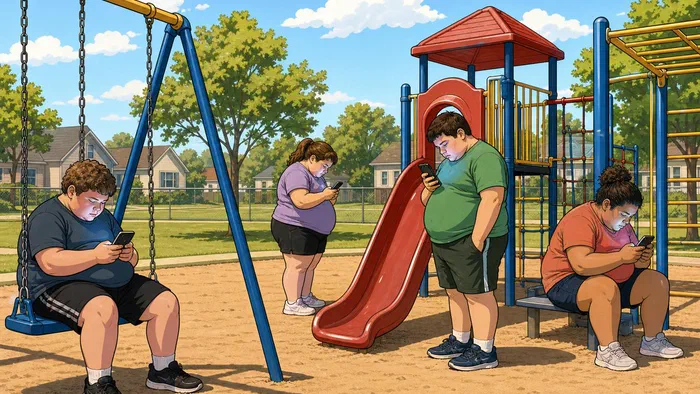
Now a twist. While parents worry about the mat, sports doctors are raising alarms about something else entirely: kids playing one sport, year-round, forever.
This month, doctors and coaches told LINK nky that repetitive, single-sport training is filling their offices with overuse injuries, the slow-burn kind from doing the same motion ten thousand times. One athletic trainer put it plainly: “It’s more just constant sport play, practices, whatever it is, year-round training.” The same piece noted that about 70% of kids quit organized sports by age 13, often from burnout.
The UCSF doctors said the fix out loud too: mix up the movement. Grappling is about as different from throwing a baseball or running soccer sprints as movement gets. For a kid stuck on one field all year, two BJJ classes a week is cross-training their main sport ignores. We wrote more about that shift in why families are trading one contact sport for grappling .

Quick caveat on the evidence, because I promised you honesty. Most of these BJJ studies come from the United States, and two of the three lean on Hawaii data. It’s a young research field. But it all points the same direction, and none of it says grappling is the thing to fear.
What to do this week
You don’t need to sign anything today. You need three checks.
First, ask any gym you’re considering one question: at what age do your kids start live sparring? If the answer is younger than 8, or if they can’t explain how kids build up to it, keep looking. The doctors say 8 to 10, after skills come first.
Second, watch what your kid copies at home. The pediatrics report’s real warning was about kids imitating what they see in UFC broadcasts: chokes and head blows on the couch. That’s a screen problem, not a gym problem, but it’s worth a conversation.
Third, if your child plays one sport year-round, treat grappling as the cross-training their body is missing. Two classes a week is plenty to break the repetition.

When you’re ready to see it in person, come meet our coaches and tour the mat — no commitment, just questions answered. You can also read through six things every parent worries about before a first class or look over how our kids program in Madison is built. Come watch a class. Watch the tapping, the resets, the coaches calling out control. Then decide.
- Kids bjj
- Safety
- Youth sports
- Parenting
Ready to Start Your Journey?
Choose the option that works best for you
Call to book: +1 (608) 416-1140