Boys Are Checking Out. Here's the Kind of Outlet They Actually Need.
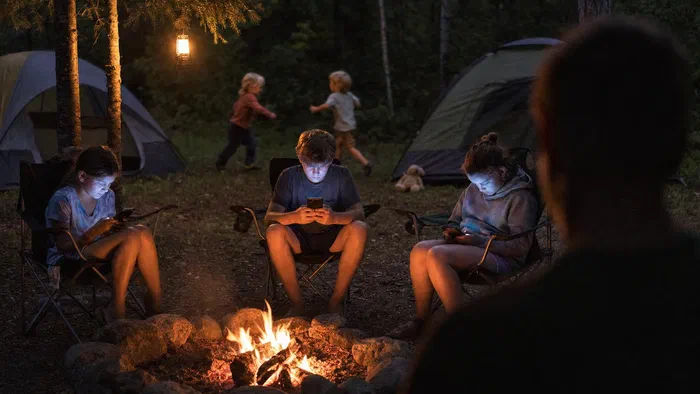
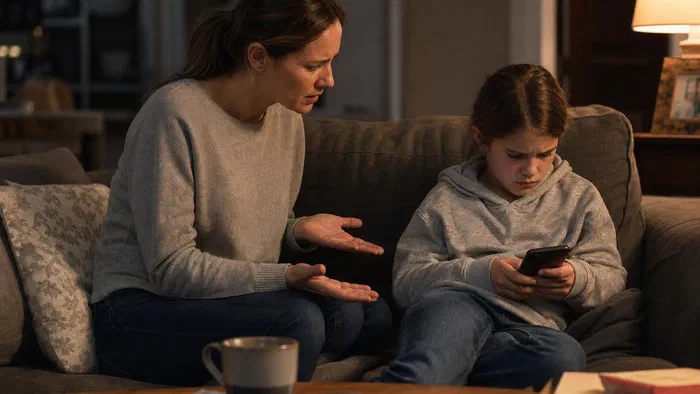
Picture last Saturday afternoon. Your son is 12, maybe 13. He’s been home all weekend. Three summers ago, he’d have been gone until dark, a pack of boys on bikes, back only when he was hungry. Now his door stays shut. You ask how his day went and get one word back. He isn’t in trouble. He isn’t sad, exactly. He’s just checked out.
Here’s the part that stings. You try to think of the last time a friend came over, and you can’t.
If that scene lands, you’re not imagining it. Something is happening with a lot of boys right now, and it’s quieter than the headlines. It isn’t the loud, angry, online story. It’s the opposite. It’s boys pulling back from school, from friends, from the whole structured world outside their bedroom door.
What “checked out” looks like in the numbers

Boys are falling behind at school, and it starts early. On the national eighth-grade reading test, boys score about 11 points lower than girls, according to the government’s 2024 report card . By college, the gap is hard to miss. Men now make up only 42% of college students, down from 47% back in 2011. For every 100 women who earn a bachelor’s degree, only 74 men do .
Then there’s the group nobody talks about at all. About 12% of young men ages 16 to 24 are what researchers call NEET: not in school, not working, not training for a job. The share of young men who’ve dropped out of the workforce entirely doubled between 1990 and 2024. And this is the part that should stop you: most of them aren’t even looking for work . They’re not stuck. They’ve stepped off the field.
This isn’t the same story as boys getting pulled into ugly stuff online. We wrote about that one already, and it’s real. (If it’s what worries you, read our post on boys, structure, and the Netflix show Lord of the Flies .) This is the quieter version. Less rage, more retreat.
The friends are gone, and boys feel it more than they say

The loneliest part of the story is the friends. Or the lack of them.
In 1990, most men, 55% of them, had at least six close friends. By 2021 that number had crashed to 27%. The share of men with no close friends at all jumped from 3% to 15%, a fivefold jump. And when young men need support, they used to turn to friends. Now, more than twice as many turn to a parent instead . Mom and Dad have become the whole social world.
It’s easy to read this the wrong way. It looks like boys don’t want close friends. The research says the opposite.
Niobe Way spent 30 years listening to boys, first at Harvard and then at NYU. Young boys, she found, talk openly about loving their best friends. They want that closeness. Then, somewhere around the teen years, they start hiding it. Not because it stopped mattering. Because they learn it’s not allowed. As Way put it in a 2024 Harvard interview : “As boys grow older, they become disconnected from their emotional selves and their close friendships, not because of who they are, but because of the cultural norms that surround them.”
Read that again. The problem isn’t the boys. It’s the rulebook we hand them, the one that says a real man doesn’t need anyone.
What boys are pressured to hide

There’s a specific pressure here, and it helps to name it plainly. From a young age, boys pick up a message: don’t look weak, don’t ask for help, handle it alone. Psychologists at the American Psychological Association spelled this out in their 2018 guidelines on working with boys and men . When boys are pushed to bottle everything up, it doesn’t make them tougher. It cuts them off, from other people and from themselves.
So what does help? The research points at a few plain things. Boys need to move their bodies. They need an adult they trust who isn’t their parent. They need to earn real status by getting good at something, not by pushing other kids around. And they need to belong to a group.
The thing that actually keeps boys engaged

If you want the single biggest lever, it’s this: a relationship with a good coach or teacher.
Researchers at the University of Pennsylvania studied more than 2,500 boys across 50-plus schools in six countries . The pattern was clear. When a boy had a strong bond with a teacher or coach, he stayed engaged. When that bond broke, he checked out, sometimes for good. The relationship was the thing that protected him. Not the curriculum. Not the pep talks. The person.
We’ve seen this work in programs that had every reason to fail. Take Becoming a Man , a Chicago mentorship program for boys in tough schools. Careful studies by the University of Chicago Crime Lab found it cut violent-crime arrests by about 37% and pushed on-time graduation up by roughly 19%. One of its core lessons is teaching boys to slow down before they react. Coaches ask a simple question: “What would a camera see right now?” That pause, taught by a grown man who cares, changes what a boy does next.
Or look at the Cave of Adullam in Detroit, a martial arts academy run by Jason Wilson. ESPN made a film about it in 2022. Wilson teaches boys to master their emotions through physical training. His line sticks with me: “It’s easier to raise boys than repair broken men.” The physical work is the doorway. The real lesson is learning to feel something hard and stay in control of it.
The honest part: not all of this works

Here’s where I have to be straight with you, because a lot of gyms won’t be.
Combat sports can go the wrong way. Put a kid in a room that’s all about being the toughest, the loudest, the guy who dominates, and you don’t fix the problem. You feed it. That worry is fair, and I’m not going to wave it off.
The best proof is an old study. Back in 1986, a researcher followed teenage boys learning taekwondo. One group trained the traditional way, with philosophy, respect, and self-control baked in. Another trained the modern way, all fighting, no values attached. A third group didn’t train at all. The result? The traditional group got less aggressive. The fight-only group got more aggressive. The kids who did nothing stayed the same.
Same sport. Opposite results. The only thing that changed was how it was taught.
So the coaching philosophy is the whole game. That’s why, if you go looking for a program, you should vet it hard. Watch a class. Does the coach talk about respect and controlling yourself, or just about winning? Do the kids help each other up, or trash-talk? Are there grown-ups on the mat who actually know these kids’ names? If a place is all bravado, walk out. It’ll do more harm than good.
Why Brazilian Jiu-Jitsu fits the job, when it’s coached right

I run a Brazilian Jiu-Jitsu academy here in Madison, so I’m not a neutral party. But hear me out, because the way BJJ works lines up with almost everything above.
BJJ is a grappling art. No striking. The whole point is control, not damage. A smaller, calmer kid can control a bigger, stronger one using leverage and timing. That one fact does something to a boy. Status doesn’t come from being the biggest. It comes from getting good.
When a kid gets caught, he taps, and then everybody resets and goes again. No shame. He learns to lose small, over and over, in a safe room with a coach right there. That builds a kid who can handle hard things without falling apart. It’s the same sturdiness we wrote about in our take on coaching kids instead of coddling them . Losing on the mat is practice for losing in life.
The belt system rewards the slow climb, not the flashy moment. At our academy there are no belt-test fees; a coach promotes a kid when the skill is actually there. And the training partners are the quiet magic. A boy shows up twice a week and, without anyone forcing it, he’s part of a group. That’s the exact thing the loneliness numbers say boys are missing. It’s also why kids who train BJJ tend to stick with it when they quit other sports.
Want the fuller picture? We’ve laid out why starting kids in BJJ early pays off , and you can see what our kids program looks like week to week. And if the friendship piece hit home for you, the same crisis is hitting grown men too. We dug into the men’s friendship crisis .
Three things you can do this week

You don’t need to sign your kid up for anything to start. Try these first.
Give him a reason to be somewhere, in person, with other boys and one good adult. A sport, a club, a shop class, a martial arts gym, a church group. The activity matters less than the mix: bodies moving, boys together, a mentor who shows up every week. Pick something with all three.
Ask a better question, then wait. Skip “how was school.” Try “what was the dumbest thing that happened today?” and then stay quiet. Boys open up sideways, in the car, over a snack, mid-activity, not across a table under a spotlight. Give him room and don’t rush to fix it.
If you go looking at programs, go watch one. Sit through a class before you commit to anything. Look for coaches who teach respect and self-control, kids who help each other, and grown-ups who know the kids by name. That’s the difference between a place that helps and a place that hurts.
Your son checking out isn’t a character flaw, and it isn’t permanent. He needs somewhere to go, something hard to get good at, and an adult in his corner who isn’t you. That’s the whole prescription.
If a mat sounds like the right fit, come see ours. You can start with the two-week intro and try it before committing to anything longer. Our Kids 2 Week Trial for $49 includes a free uniform, and you’re welcome to watch a class first. Just a room in Madison where boys get good at something hard, together.
- Kids bjj
- Madison
- Boys
- Parenting
- Masculinity
- Mentorship
Ready to Start Your Journey?
Choose the option that works best for you
Call to book: +1 (608) 416-1140