We Built an Anxious Generation. Then We Sent Them on Summer Break.
Tell me if this sounds familiar. Your kid is on the couch, head down, thumb scrolling, on a 75-degree afternoon. And something inside you flinches. I would never have been inside on a day like this. My mom would have shoved me out the door.
Then the second thought lands, the harder one. You handed them the phone for good intentions. You wanted to know where they were. You wanted them reachable when school let out. You wanted a way to text running late without panicking. The phone was a lifeline, and most of us reached for it for the same mix of love and worry.
But none of us knew was what came next. The lifeline turned into an addiction. Now the kid is more anxious, you’re more anxious, and the device that was supposed to make life easier sits between you most evenings.
Summer is where all of that compounds. A 2025 Kids Mental Health Foundation survey found that half of parents are just as worried about their child’s mental health in summer as they are during the school year. One in ten are more worried.
This piece is about why that gut feeling is right, and what the research says actually helps.
How we got here

The numbers caught up to the feeling.
The CDC’s youth survey shows depression symptoms in high schoolers jumped from 30% in 2013 to 40% in 2023 . For girls, it’s 53%. About one in five kids ages 12 to 17 reports anxiety symptoms in any given two-week stretch.
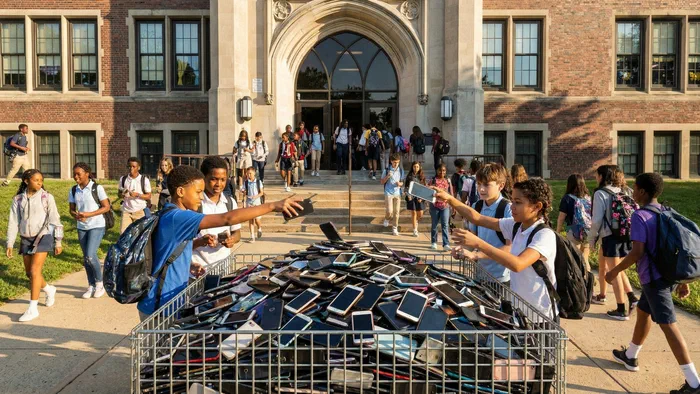
Common Sense Media’s 2023 census found kids 8 to 12 spend about five and a half hours a day on screens outside school. Teens, more than seven. Multiply that out and you get an awkward fact: kids 8 to 12 now log more phone hours each year than they spend inside a classroom.
Phones did not invent every problem. School pressure, housing costs, and a long pandemic all stacked on top. But the timing — symptoms doubling in the decade smartphones became universal — is hard to wave away. Phones are the amplifier.
Summer is when it compounds

Same survey: parents say the top three summer worries are more screen time (38%), boredom (34%), and broken sleep routines (26%) .
Here’s how it actually plays out in a house. School ends, and the rhythm that held the week together — the bus, the bell, lunch with friends, a coach yelling on a field — just stops. The phone is right there, and it’s already the most reliable thing in your kid’s day, so it slides into the empty space. They start staying up later because nobody’s checking, then sleeping in until eleven, and a kid who runs on broken sleep is a kid whose mood is on a hair trigger by Wednesday.
Then late August hits. TikTok calls it “August scaries” — the panic that builds when a kid realizes they spent ten weeks indoors and now school starts in two. By then the dose-response is already in motion, and not in a good direction.
If you’ve watched your kid get quieter in late June — snippier, glued to the phone, sleeping in until noon, snapping at their sister over nothing — you’re not imagining it.
You are not the only parent feeling this

Jonathan Haidt’s The Anxious Generation was the most-discussed parenting book of 2024, named best of the year by the New York Times, the Wall Street Journal, and Time. His Phone-Free Friday Summer Challenge runs June 14 through August 15 this year. The thesis: roll back the phone-based childhood, restore real play.
Then Netflix dropped Adolescence in 2025. Most-watched series in the platform’s history. Number one in 80 countries within 17 days. What rattled parents was not the violence — it was watching how a kid in a normal bedroom got radicalized through a phone his parents weren’t checking. We wrote about what actually protects kids from that pipeline .
A Slate essay this past June nailed the contradiction in affluent parenting circles — “Now I have to plan my kid’s unplanned summer?” — calling it “de-cultivation as status.” Strip the kid of camp, structure, and screens, and call it freedom. Lenore Skenazy of Let Grow has been making the gentler version of the same point for fifteen years: kids grow when adults step back.
The point is, this is not just your family. The whole conversation has shifted.
What the research says actually works

Here’s where things get useful.
A 2025 meta-analysis in Frontiers in Public Health pooled 19 trials with about 2,000 kids. Put it this way: the typical kid who exercised was calmer than roughly 6 out of 10 kids who didn’t. That’s about what kids get from seeing a therapist. A separate 2025 Lancet eClinicalMedicine review of eleven international cohorts found that kids who hit the WHO movement guideline — about an hour a day, most days — had noticeably lower anxiety risk.
Now the gap. Only 20 to 28% of US kids age 6 to 17 actually hit the WHO movement guideline of about an hour a day, most days. We know what helps. We’re not delivering it.
A few things matter about which movement works. The research keeps pointing at the same combination:
- One consistent activity, not five
- Same peers showing up week after week
- An adult coach who isn’t a parent
- Real challenge — sweaty, slightly scary, finished with a smile
This is also where the strongest counter-argument lives, and it’s worth meeting head-on. Yes, kids need to be bored. They need unscheduled hours. The summers people remember fondly were full of boredom and bikes and not much else. But in 2026, “unscheduled” no longer defaults to bikes. It defaults to a screen. The boredom that used to push kids outside now pushes them deeper into the feed.
Pick one anchor activity. Leave the rest of the week genuinely empty.
The Madison piece

We covered the local angle in our post on the UW-Madison study of 1,300 sixth graders . Short version: the middle school transition is a real vulnerability point, and kids who walked in with adult mentors and a sense that struggle is normal showed 34% fewer discipline issues and better grades. The biggest predictor was not test prep. It was a steady adult outside the family who believed in them.
Madison gives you a head start. Vilas Zoo is free. The Arboretum has 20-plus miles of trails. Lake Wingra has a public beach. Bike the Capital City Trail or the Lakeshore Path until your kid actually gets tired. Devil’s Lake is an hour away and ruins phones in the best way — climb the bluffs, swim, drive home with a sunburned kid asleep in the back. Use them.
Macaroni KID Madison runs a weekly roundup of free local family events and keeps a live 2026 summer camp guide — bookmark it. They do the legwork on what’s happening around town so you don’t have to.
But none of those fill the part of the week that does the real work — the sweaty, scheduled, peer-based hour with a coach. That’s the gap.
One more local landmine worth knowing about: Wisconsin has no specific age at which a kid can legally be left home alone. The state uses general neglect statutes, and the gray area itself is part of the summer stress for working parents. There is no permission slip. You’re guessing.
What this looks like for your kid

Pick one anchor activity. One hour, two or three times a week, that runs the same way every time. Same coach, same kids, same room.
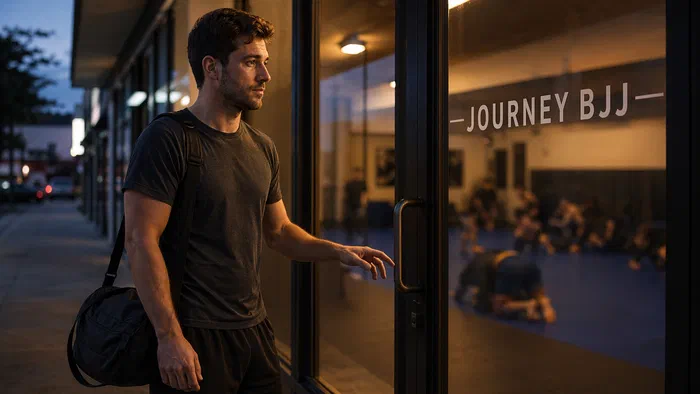
For us — and the research on kids and BJJ backs this up — Brazilian Jiu-Jitsu hits the brief well. Indoor and air-conditioned, which matters for the heat days that wreck Madison summer plans. Year-round, so the dose doesn’t drop off in August. A coach who’s not your kid’s parent. The same training partners showing up week after week. We’ve written more about what kids actually get out of training .
Whatever you pick — swim team, climbing gym, art studio, BJJ — pick one. Stick with it. The research is loud and clear that consistency beats variety.
If BJJ sounds like the right shape for your family, we offer a 2-week intro for $49 with a free uniform. It’s enough time for your kid to know if it fits.
Closing

Your kid is not broken. The system around them got tilted, fast, and most of us didn’t see it tilting until the data caught up.
The good news in the pile of bad news: the fix is concrete. One activity, real bodies in a real room, a coach who knows their name. That’s it. That’s the lever.
Pick the lever. Pull it before June.
Sources
- Kids Mental Health Foundation. “Half of parents survey: mental health and summer.” 2025. kidsmentalhealthfoundation.org
- CDC. “Youth Risk Behavior Survey Data Summary & Trends Report.” 2023. cdc.gov/yrbs
- Common Sense Media. “The Common Sense Census: Media Use by Tweens and Teens.” 2023. commonsensemedia.org
- Frontiers in Public Health. Meta-analysis of aerobic exercise and youth anxiety. 2025. frontiersin.org
- Slate. “Now I Have to Plan My Kid’s Perfect Unplanned Summer?” June 2025. slate.com
- Lancet eClinicalMedicine. Dose-response review of physical activity and youth anxiety. 2025. thelancet.com
- Kids bjj
- Youth anxiety
- Summer
- Screen time
- Madison
- Mental health
Ready to Start Your Journey?
Choose the option that works best for you
Call to book: +1 (608) 416-1140