Combat Sports Just Went Mainstream. Here's What That Means If You've Been Curious About Jiu-Jitsu.
It’s a Saturday night and you’re on the couch with your phone tilted sideways, half-watching two grown men try to choke each other on a lawn. You’re not even sure how it ended up on your screen. But you keep watching. And somewhere in the back of your head, a quiet little thought shows up, the same one you’ve had before: I could never do that.
Hold that thought. We’re going to take it apart.
The night combat sports hit the cultural center

On June 14, 2026, the UFC put on a fight night on the South Lawn of the White House. They called it Freedom 250, and it was the first combat-sports event ever held there. This was not a small thing. They built a huge arena right on the lawn. Tens of thousands of people packed in, and it went out on a major TV and streaming deal. In the main event, Justin Gaethje upset Ilia Topuria with a fourth-round TKO to take the lightweight title (ESPN ). Think about what that means. When a sport gets staged at the seat of national power, it has stopped living on the edge of the culture. It’s now at the center of it.
I’m not here to talk about the venue or the politics. The venue is just a marker, and a loud one.
Here’s where most coverage gets blurry, so let me sort it out fast. The UFC’s sport is MMA, short for mixed martial arts. The “mixed” part matters. It blends striking, which is punches and kicks, with grappling, which is wrestling and fighting on the ground. That’s the loud thing you saw on the lawn.
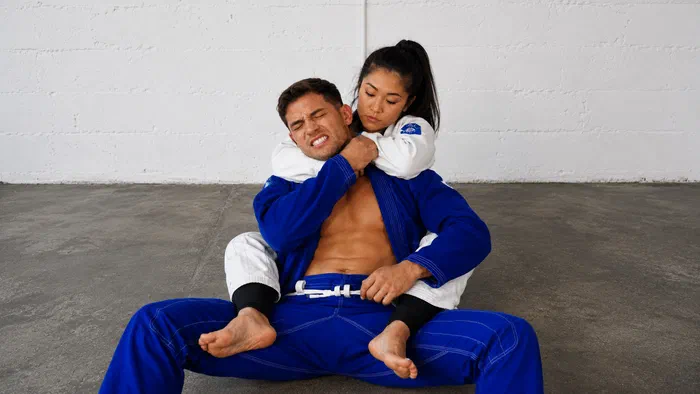
But you wouldn’t walk into the striking part. The part an ordinary adult shows up and does is the grappling. That’s Brazilian Jiu-Jitsu, or BJJ. It’s the ground game. No punches. No kicks. You just control a position and work for a submission, which is a hold that makes your partner tap out. It’s the chess match under the fight, minus anyone hitting you.
Jiu-jitsu just became a college sport

Here’s a story that hasn’t gotten nearly enough attention. The grappling part, the no-striking ground game, just became a real college sport. In April 2025, a new governing body launched called the National Collegiate Grappling Association, or NCGA (NCGA ). It’s the first national group to run jiu-jitsu-style grappling as a college sport. The people who started it came from the college wrestling and USA Grappling worlds. The format is no-gi submission grappling, the jiu-jitsu kind, no striking. And it’s a separate sport from folkstyle wrestling, which has had its own NCAA championships for more than a century.
The first national championship ran in November 2025. The pilot drew about 21 schools and more than 250 athletes, with weight classes for both men and women. Sacramento State won the first team title. The schools that sent athletes are names you’d know: Auburn, Texas A&M, UCLA, USC, and the University of Florida. The 2026 national championship ran this past spring, again at Sacramento State. The seed for all this was a single dual meet back in 2019, Marquette against Northern Illinois, set up by coach Chris Martin. “These athletes are in their athletic prime, and the college sports market is huge,” Martin said. “It makes sense to give them an opportunity to compete” (BJJEE ). A sport only earns a national college championship when real people show up to do it, year after year. That’s quiet proof this isn’t a fringe hobby. It’s a legit sport with a pipeline, and the part you’d actually do, the no-striking grappling, is exactly the part being made official.
So the permission is here. The fights are easy to watch, and the grappling is growing into a real sport. Which brings us back to you, on the couch, with that thought.
Watching a fight and trying the sport are not the same thing

Here’s the gap nobody talks about. Watching a title fight feels like proof you could never step on a mat. The athletes are huge. They’re fast. They’ve trained their whole lives.
And you’re a 38-year-old who sits at a desk and hasn’t done a pushup since the gym closed in 2020.
Most people who get curious never go. The fear does its job. And the fears are real, so let’s name them instead of pretending they’re silly.
You’re worried about looking foolish. You’re worried about getting hurt. You’re worried you’ll be the oldest, slowest, least-fit person in the room, surrounded by 22-year-old athletes who eat people like you for breakfast.
Fair. Let’s take them one at a time.
“Everyone will be way fitter and younger than me”

Two answers here, and the first one is research.
You’re not imagining the intimidation. A 2026 study in Frontiers in Sports and Active Living found that a large share of non-members feel uncomfortable or judged about joining a gym (read it here ). The interesting part: the anxiety isn’t about being weak. It comes from feeling like you don’t match the “dominant demographic,” like the room belongs to a certain type of person and you’re not it. That’s a normal human reaction, not a character flaw.
The second answer is who actually shows up. A jiu-jitsu room is not a fight card. The average adult who walks in for the first time is in their late 20s or 30s. Working professionals. Parents. People who decided they wanted to feel capable again. At our adult program , the room is full of exactly that, people working toward similar goals, no ego, no chest-pounding.
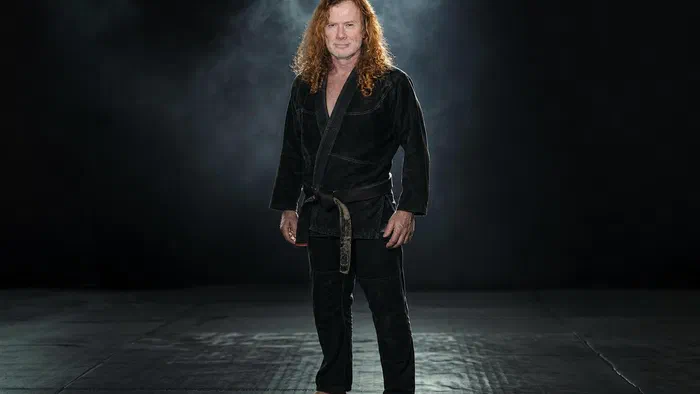
If you still think you’re too old, read about Dave Mustaine earning his black belt at 64 . He started in his fifties.
“I’ll get hurt”

This one deserves a straight answer, not a sales pitch.
Jiu-jitsu is grappling with real resistance, so yes, injuries happen. I’m not going to tell you the mat is made of pillows. But the honest comparison matters. Wrestling is a different grappling sport, more explosive and slam-heavy. One peer-reviewed study found BJJ has a much lower injury rate, roughly 9 injuries per 1,000 training sessions versus around 30 for wrestling (ScienceDirect ).
Why so much lower? Because of how the sport works. There’s no striking, so nobody is punching or kicking you. When you’re caught, you tap, and your partner lets go. You control the pace.
We coach technique first and treat the mat like a competition floor, which means no slamming, no cranking, no uncontrolled aggression. Certified coaches enforce that every class. We even run an anonymous safety survey every few classes so problems surface fast.
Real, not zero. That’s the honest version.
“Someone my size could never handle a bigger person”

This is the fear that flips into the best surprise.
The whole point of jiu-jitsu is that leverage beats strength. A smaller person who knows what they’re doing can control a bigger one who doesn’t. It all happens on the ground, with grips and angles, not punches. That’s not a marketing line; it’s the engineering of the sport.
The story I love telling is Ed O’Neill, the actor who played Al Bundy. He started BJJ at 45. In his first lesson, a smaller instructor controlled him completely, using nothing but leverage and technique, and his size meant nothing. He was hooked on the spot. Sixteen years later, at 61, he earned his black belt under Rorion Gracie (BJJEE ).
A guy in his mid-forties walks in, gets humbled by leverage, and falls in love with it. That happens in real rooms every week, including ours.
What the first visit actually looks like

Here’s the thing that lowers the stakes more than any pep talk: you don’t have to roll on day one.
You don’t have to spar a soul. You don’t have to be in shape first. You don’t even have to wear a uniform; clean athletic clothes and a water bottle are plenty for a first look. If you want to know what the early weeks really feel like, we wrote the honest version in your first month of BJJ , and a simple how to prepare for your first class checklist.
You watched a fight on a Saturday night and felt a flicker. That flicker is worth more than you think. The people who act on it aren’t braver than you. They just walked in once.
Come meet the coach, tour the room, and ask every question on your list. No rolling, no pressure, no obligation. Just a conversation and a look around.
Three things you can do this week

Whether or not you ever set foot in our gym in Madison, here’s how to turn that couch thought into something real.
-
Watch one grappling match for the chess, not the violence. Pick a submission-grappling match online, no striking, and try to follow the positions instead of waiting for the finish. You’ll start to see it’s a puzzle, not a brawl. That reframe is half the battle.
-
Do a five-minute movement test. Get on the floor and stand back up without using your hands. Do a few slow squats. See where your body is right now. No judgment, just a baseline so you know where you’re starting.
-
Find a beginner-friendly room and watch one class. You don’t have to commit to anything. Just go look. If you’re in the Madison area, you can check our schedule and pick a time to come watch.
You don’t have a UFC card or a fighter’s calendar. You have a Tuesday at 6pm. That’s enough.
- Brazilian jiu jitsu
- Bjj madison
- Adult bjj
- Combat sports
- College jiu jitsu
Ready to Start Your Journey?
Choose the option that works best for you
Call to book: +1 (608) 416-1140