Am I too old to start jiu-jitsu? What the older grappler actually needs to know
There’s a guy at almost every jiu-jitsu gym. He’s 50-something, a little soft around the middle, and he never does anything that looks cool.
No flips. No flying submissions. But you cannot move him. You can’t pass his legs, you can’t knock him over, and somehow you’re the one running out of gas. That guy is real jiu-jitsu. The stuff you see on YouTube is not.
The clips that go viral, the spinning acrobatic finishes in the UFC, get done by young, elite athletes. That is the sport at its flashiest. It is maybe five percent of what jiu-jitsu actually is. The other ninety-five percent is quiet. Being in the right spot. Controlling weight. Being hard to move. And that part has almost nothing to do with how old you are.
So if you’re 35, 45, or 55 and wondering if you missed the window, here’s the honest answer. You didn’t. But you do need to know a few things first.
Stop trying to hang with the young guys

The biggest mistake older beginners make is simple. They try to keep up with the 22-year-olds using strength and speed. That’s how you gas out in three minutes and tweak your back.
You don’t have their fast-twitch burst anymore. Fine. You don’t need it. The move is to slow everything down, quit muscling, and chase good technique instead of “winning” the round.
You’re going to get tapped a lot at first. Getting tapped means getting caught in a hold and slapping the mat to give up before anything hurts. Make peace with it early. The Gracie family, who built this art, tell their own over-40 students the same thing: lean on technique and position, not strength. Every tap shows you a hole in your game. That’s the lesson, not the loss.
Jiu-jitsu is won in position, not on the highlight reel

There’s a phrase that’s been around since the start: position before submission. Helio Gracie, one of the founders, drilled it into everyone. Get to a good, controlling spot first. The finish comes later, once your partner can’t do much about it.
For an older or smaller person, this is everything. You learn to put your weight where it’s heavy and hard to lift. You learn to stay in good position instead of scrambling. And you learn to off-balance bigger people, which just means pushing or pulling them at the right moment so they have to catch themselves instead of attacking you.
None of that is athletic. It’s mostly timing and patience, and you’ve got more of both at 45 than you did at 22. Coach Matt Thornton built his whole teaching reputation on this same idea: control comes before flash. Want the basics? Here’s what jiu-jitsu actually is .
What actually gets people hurt

Here’s the part most people get backwards. They assume the danger is in competition. The data says the opposite.
A study of jiu-jitsu practitioners found that most injuries, and most people’s single worst injury, happened in regular training, not in tournaments. Fingers got hurt the most, then knees and shoulders, and mostly sprains and strains. You can read the full injury study here .
That sounds scary, so read it again. If most injuries happen in training, then the risk is largely in your hands. You decide how hard you roll. Rolling just means live sparring, where you and a partner go at it with real resistance. Tap early and often. Roll light. Pick calm partners and skip the wild rounds with the guy who treats every Tuesday like a title fight.
And here’s the big one: you never have to compete. Competition is the highest-intensity version of this, and a 40-something training for fitness and skill can simply opt out. We wrote a deeper, honest post on the injuries to expect and how to avoid them .
Train to be sturdy, not explosive

If you want to prep your body, start now. But train for the right thing. Don’t train to be explosive. Train to be sturdy.
The science is on your side. After 40, your explosive power, the fast jumping and sprinting kind, drops about 2 to 4 percent a year. But your slow, grinding strength fades far slower, around half a percent to 1 percent a year, according to this research review .
Here’s what that means. You lose the burst the young guys lean on. But the holding strength, the kind you use to grip and press and keep a position without moving, holds up well into old age. And holding strength is exactly what good jiu-jitsu position runs on.
So your game ages gracefully. Add some gentle mobility work, which just means keeping your joints loose and moving well, and you stay durable. You don’t need to out-muscle anyone. Not sure you’re fit enough to start? Here’s the honest take on getting in shape first .
Three things to do this week

You don’t need a grand plan. You need three small steps.
First, talk to a coach and be blunt. Tell them your age, your bad knee, your worry, all of it. A good coach gives you a straight answer instead of a sales pitch.
Second, start gentle mobility now. Ten minutes of easy stretching and slow joint circles a few times this week. Nothing fancy.
Third, commit to a single class, and roll light when you do. Not a season. One class.
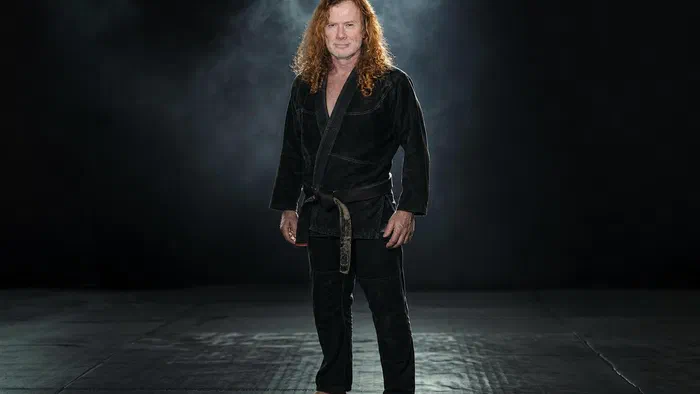
Still think you’ve missed the window? Dave Mustaine, the founder of the metal band Megadeth, earned his BJJ black belt at 64 . Late starts are normal here.
And you don’t have to look to a rock star. Our oldest student, Mark, is around 64. He’s trained for years, he still gives the young guys a hard time on the mat, and he’s never been seriously hurt.
When you’re ready, come try our 2-week intro for $49. Two weeks of classes at Journey BJJ here in Madison, a free uniform, and no long contract. Roll light, ask questions, and feel how the quiet game works. See you on the mat.
- Adult bjj
- Starting bjj over 40
- Brazilian jiu jitsu madison
- Jiu jitsu for older beginners
Ready to Start Your Journey?
Choose the option that works best for you
Call to book: +1 (608) 416-1140