You Can't Outrun Your Fork: The Calorie Science That Quietly Rewrote Everything
It’s 6:40 on a Tuesday morning in Madison, and Kevin checks his watch on the treadmill at the west-side gym. Four hundred calories burned. He pictures the bagel he’s going to eat at his desk in an hour and thinks, “Earned it.” Kevin has done this for years. He runs, he earns, he eats. The scale hasn’t moved in three of those years.
He’s not lazy. He’s not even wrong about the bagel tasting good. He’s just been handed a math problem that doesn’t work the way anyone told him it would.
Here’s the short version, and it’s worth sitting with before you read another word. Burning calories in a workout barely creates the deficit that drives weight loss, because your body quietly cancels out most of the effort. So stop treating calories burned as calories earned to eat back. The fork creates the deficit. Use exercise for your health and for the simple fact that you’ll keep doing it, not as a way to out-train your diet.
That last part decides everything. The real question was never “what burns the most calories.” It’s “what will I still be doing in two years.” Hold onto that. We come back to it.
For most of our lives, the story was simple. Move more, burn more. Create a calorie deficit = weight loss. The newest research says it’s not that simple to actually create the deficit through workouts.
The Hadza who burned the same as you

Start with a finding that broke a lot of brains. An anthropologist named Herman Pontzer went to Tanzania to measure the Hadza, a hunter-gatherer people in Tanzania who still live mostly off what they hunt and gather. These are people who walk 6 to 9 miles a day hunting and digging for food. No cars, no desks, no Netflix.
Pontzer used the gold-standard method for measuring how much energy a body burns. (You drink water tagged with harmless tracers, then researchers measure how fast you flush them out.) He expected the Hadza to torch way more calories than a software developer in Madison.
They didn’t. Once he adjusted for body size, the Hadza burned about the same number of daily calories as office workers in the US and Europe (Pontzer et al., PLOS ONE, 2012). Walking all day, hunting all day, the same total. That makes no sense if you picture the body as a calories-in/calories-out machine, where every bit of effort subtracts from the calories you ate in food.
Your body has a budget, and it defends it

So where do the calories go? Here’s the part that rewrote the textbooks.
When you move more, your body trims energy somewhere else. It doesn’t add your workout on top of everything else. It rearranges the budget. You burn more during the run, then your body quietly spends less the rest of the day. It fidgets less. It nudges your resting burn down a hair. It cranks up your hunger so you eat the calories back.
Researchers call this the constrained-energy model, which is a fancy way of saying your body fights to keep its daily total roughly fixed. The largest dataset ever assembled on this put a number on it (Careau and colleagues, Current Biology, 2021, tracking 1,754 adults). Here’s the mental model that sticks. For every 100 calories you burn in a workout, your body quietly cancels out about 28 of them. It fidgets less, dials down background processes, and nudges your hunger up. You’re left with only about 70. That’s why the workout you thought created a big deficit barely makes one.
This isn’t one weird study. The same plateau showed up in earlier work (Pontzer and colleagues, Current Biology, 2016). Push activity up, and total daily burn flattens out instead of climbing in a straight line.
Why the gym alone barely budges the scale

Now the math problem from the treadmill makes sense. If your body cancels out most of the deficit you’re trying to create, the scale stalls.
The research backs the frustration. A recent analysis pooled 116 randomized trials covering 6,880 adults carrying extra weight. Exercise alone, with no change to eating, produced only modest weight loss. Pontzer’s own summary is blunt: the long-term weight loss you can expect from exercise by itself is about four and a half pounds (2 kg). After a year of effort.
Read that again, because it’s the whole point. Four and a half pounds. Not because you did it wrong. Because the body is built to hold the line.
If your goal is a smaller number on the scale, the lever is the fork. Diet, not the treadmill, creates the deficit. That’s the uncomfortable truth in the title, and there’s no way around it.
So is exercise pointless? Not even close

Here’s where most people take the wrong lesson and quit. If the gym won’t shrink me, why bother?
Because a six-pack or a lean physique is just one outcome, and it might be the least important one. Chasing a smaller number on the scale, or a certain look in the mirror, misses most of what being more active actually does for you.
Look at what it does for your body. It strengthens your heart and lowers your blood pressure. It helps your body handle blood sugar, which cuts your risk of diabetes. It keeps your muscle as you age, and muscle is what keeps you strong, steady on your feet, and able to live on your own into your seventies. That matters enormously if you’re losing weight by any method, which is the whole reason we wrote about protecting muscle on weight-loss drugs .
Now look at what it does for your mind. It steadies your mood and takes the edge off stress. It helps you sleep deeper. It’s a genuinely good treatment for low mood, which we dug into in why exercise works like therapy for depression . None of that shows up on a scale. All of it shows up in how you feel on a Wednesday.
The hard numbers back this up. A team led by Emmanuel Stamatakis, writing in Nature Medicine in 2022, followed more than 25,000 adults who described themselves as non-exercisers. The ones who got short, hard bursts of movement woven into normal life, roughly three bouts of one to two minutes a day , had 38 to 40% lower odds of dying over the study and about half the rate of heart-related death. One honest caveat: this is an observational study, so people who move more probably do other healthy things too. The size of the effect is still hard to ignore.
The lever almost nobody pulls

If the heroic workout gets canceled out, what actually adds up? Just moving around throughout the day! The stuff you don’t even count.
Walking to a meeting. Standing instead of sitting. Carrying groceries. Pacing on a call. Researchers call it non-exercise movement, and it’s the single most variable part of your daily burn. Two people the same size can differ by hundreds of calories a day just from how much they move when they’re not “working out.”
The classic study found that leaner people simply sit about two hours less per day than people carrying more weight (Levine et al., Science, 1999). Matching that movement is worth roughly 350 extra calories a day. Not from a workout. From staying upright and busy.
A fair word of caution: those numbers swing a lot by body size and by job. Someone on their feet all day at work has a huge head start over a desk worker, and you can’t always close that gap by fidgeting. But the direction is clear and it’s free. The movement you smuggle into your whole day beats the hour you dread and skip.
The catch that decides all of it

Here’s the part that decides everything, and it’s the part the studies tend to bury.
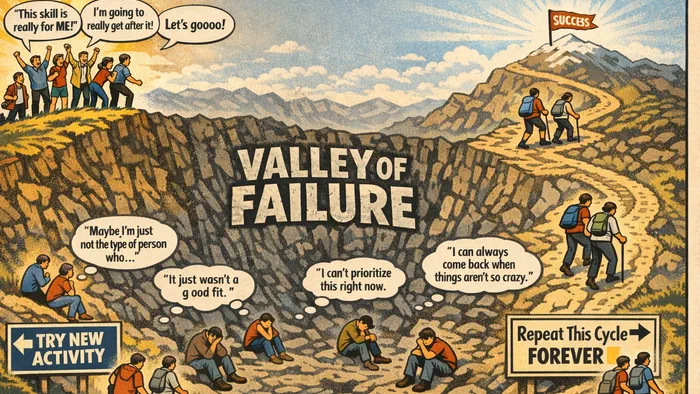
None of this compounds unless you keep doing it. Not the walking, not the bursts, not the workout. The best plan on paper does nothing the moment you abandon it. And people abandon movement they treat as a chore, a punishment, a calorie debit card. You can only white-knuckle a thing you hate for so long.
So the real question isn’t “what burns the most calories.” Your body already told us it’ll fight that game to a draw. The real question is “what will I still be doing in two years.”
That’s a different kind of question. It points away from grinding and toward something you actually want to show up for. People stick with movement that’s social, that teaches them something, that gives them a reason to come back that has nothing to do with a number. That’s also why solo fitness keeps losing to training with other people when life gets busy.
Where Brazilian Jiu-Jitsu fits

This is the honest reason Brazilian Jiu-Jitsu works for so many adults in Madison, WI, and it’s not the one you’d expect.
It’s not a calorie incinerator. The science just told us that frame is broken anyway. It’s that people keep showing up. You don’t come to a Brazilian Jiu-Jitsu class in Madison to hit a calorie target. You come because you’re three details away from finally hitting that sweep, and because your training partners noticed when you missed Tuesday. You learn a skill. You get pulled back by curiosity, not guilt. The movement is real, every class is different, and the reason to return is built in.
That’s the lever the research keeps pointing at, dressed up in a gi. Not the perfect workout. The one you’ll actually return to, for years, because you want to.
Three things you can try this week

You don’t need a coach for any of these. Start here.
- Stop spending the gym as food. For one week, eat the way you’d eat with no workout, and let exercise be its own thing. Notice the urge to “earn back” the calories. That urge is the compensation the research describes, in real time.
- Hunt for sitting hours. Pick two chunks of your day you normally spend in a chair, a phone call and an after-dinner hour, and stand or walk through them instead. That’s where the 350 calories live.
- Find the bouts. Three times a day, do one hard minute. Stairs instead of the elevator, a brisk walk to the far parking lot, ten quick squats. That’s the pattern tied to the big heart numbers.
And if you want movement that pulls you back on its own, come look at ours. No pressure, no sales pitch, just a conversation.
You can’t outrun your fork. But you were never supposed to. Eat like the deficit lives in the kitchen, move because it keeps you whole, and pick the kind of movement you’ll still love when the novelty wears off. That last part is the only one that compounds.
- Fitness
- Weight loss
- Brazilian jiu jitsu madison
- Exercise science
Ready to Start Your Journey?
Choose the option that works best for you
Call to book: +1 (608) 416-1140