The 'admin night' effect: why solo fitness is losing to community training
Right now on TikTok, adults are inviting friends over to pay bills together. Not for help. For presence. They call it "admin night."
CNN called it "the new book club for busy adults." Bloomberg wrote about it. The Week called it "turning paperwork into a party." People who had been procrastinating on their taxes for weeks suddenly knocked them out in an evening, just because a friend was sitting on the couch next to them doing the same thing.
Nobody was helping. Nobody was watching over their shoulder. The friend was just... there.
This trend went viral because it works. And the reason it works is the same reason you stopped going to the gym.
The psychology behind "just being there"

Psychologists have a name for what admin night stumbled onto. It's called body doubling.
Body doubling started as a strategy in ADHD communities. The idea is simple: having another person physically present while you work makes it easier to start, stay focused, and finish. You're not collaborating. You're not even talking. Their presence alone changes your behavior.
The mechanism behind it is social facilitation theory, which researchers have studied since the 1890s. Norman Triplett first noticed it with cyclists: they rode faster when racing alongside others than when riding alone. Meumann found people could lift heavier weights when someone was watching. The mere presence of another human being changes how we perform.
What's interesting is how deep this goes. Neuroscience research on mirror neurons shows that when you watch another person perform an action, the same motor regions in your brain activate as if you were doing it yourself. Your brain doesn't fully distinguish between watching and doing. So when your friend sits on the couch filing her taxes, your brain is partially simulating that behavior. The mental friction of starting your own task drops because, neurologically, you've already begun.
Psychology Today reported in 2025 that body doubling isn't just for ADHD anymore. It works for anyone who struggles with task initiation, procrastination, or follow-through. The reasons: accountability (being seen), mirror neurons (watching someone else work triggers your own motivation), and something harder to name: not being alone with your own excuses.
A 2024 study published in ACM Transactions on Accessible Computing investigated body doubling with neurodivergent participants and found something worth sitting with: the effect isn't purely cognitive. Participants described feeling less overwhelmed, less anxious, and more capable of starting when someone else was present, even when that person said nothing and did nothing related to their task. The companionship itself reduced the emotional weight of the work.
This is accountability stripped down to its core. Not an app pinging your phone. Not a motivational quote on your lock screen. A real person who is physically present and expects something from you.
Now apply that to fitness

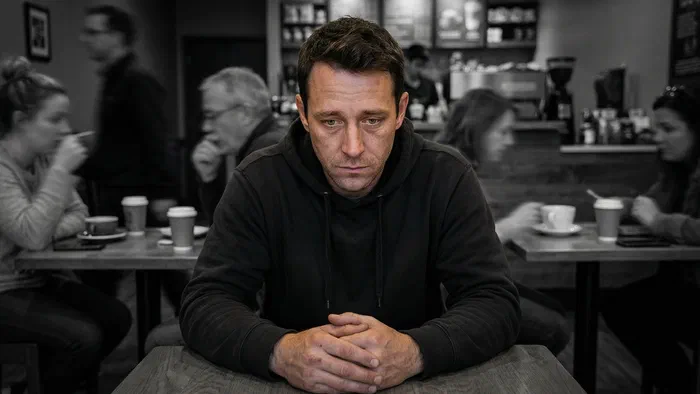
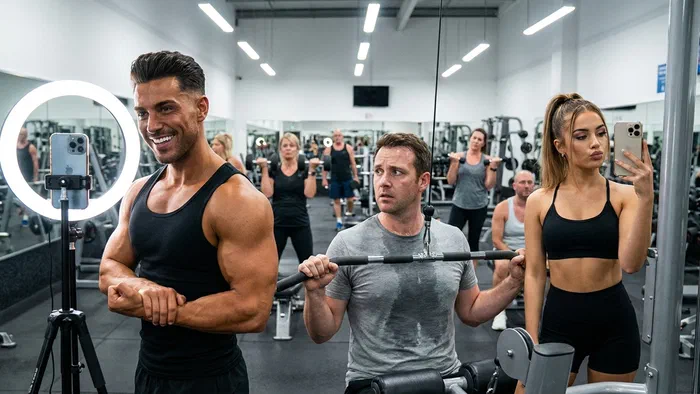
Think about what a typical gym workout looks like. You walk in. You put in earbuds. You do your sets next to people doing their sets. Nobody talks. Nobody knows your name. If you leave halfway through, the guy on the bench press next to you won't even look up.
I actually think gyms have gotten lonelier over the past decade. Wireless earbuds killed the last remaining excuse to make eye contact. Touchscreen cardio machines face you toward a screen, not toward other people. The entire experience is engineered for isolation disguised as personal space. You're technically in a room full of people, but you might as well be in your garage.
And the data reflects it. Roughly 50% of new gym members quit within six months. But here's the part most people miss: members who attend group fitness classes stay 22% longer than those who work out solo. The equipment is the same. The exercises are similar. The difference is other people.
Your Peloton doesn't text you. Your Apple Watch doesn't wonder where you've been. Your running app sends push notifications, and you swipe them away without a second thought. None of these tools create the social obligation that actually changes behavior.
And here's what nobody wants to admit: when you quit the gym, you probably told yourself a story about motivation or discipline or being too busy. But think about the last commitment you kept consistently. Was it one where someone was waiting for you? Your kid's soccer practice. A work meeting. Dinner with a friend. You showed up because another person expected you there. The gym never asked that of you. It just charged your credit card.
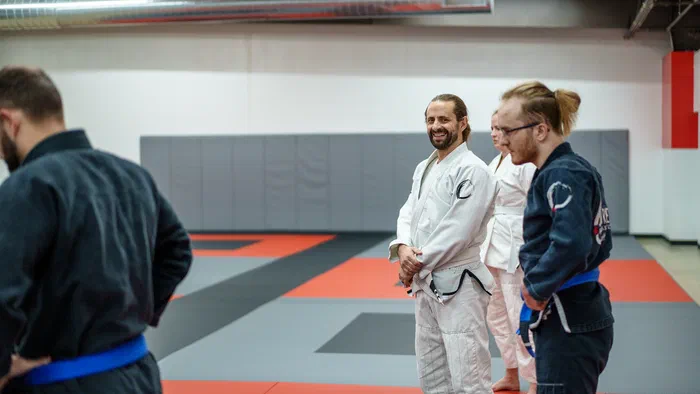
Now think about what a Brazilian Jiu-Jitsu class looks like. You walk in and people say hi. You pair up with a training partner. For the next hour, another human being is literally holding you accountable with their body. You can't zone out. You can't phone it in. You can't skip the hard part because your partner is right there, working just as hard.
Admin night works because someone is sitting next to you while you do hard things. BJJ works because someone is rolling with you while you do hard things. The principle is identical. The intensity is just turned up.
Accountability isn't a perk. It's a mechanism.

This is something I think about a lot. We've been sold a story about fitness that goes like this: if you were disciplined enough, you'd work out consistently. If you quit, it's because you're weak.
That framing is backwards. Discipline matters, sure. But discipline doesn't develop in a vacuum. It develops in an environment where people see you, expect you, and notice when you're gone.
The data backs this up. A study published in Patient Preference and Adherence found that accountability structures dramatically improve follow-through: reminder-based interventions alone improved adherence in 51% of cases, but when an accountability component was added, that number jumped to 91%. Having someone who expects you to show up changes whether you show up.
There's a related phenomenon called the Kohler motivation gain effect. Researchers in the 1920s noticed that weaker rowers performed better when their output was linked to a partner's. A 2023 meta-analysis in Kinesiology Review confirmed that this effect holds up across exercise contexts: people in partner-based conjunctive tasks (where the group's result depends on both participants) exercised significantly longer than those working alone. One study found participants exercised for an average of 21.9 minutes in partner conditions compared to 10.6 minutes alone. That's not a marginal improvement. People trained more than twice as long when someone else's effort was tied to theirs.
Think about what that means for BJJ. Every round of sparring is a conjunctive task. Your partner can't drill without you. You can't roll without them. Your effort directly shapes their training, and theirs shapes yours. The Kohler effect isn't some laboratory curiosity here. It's baked into every class.
And a 2025 review in Frontiers in Psychology found that combat sports training improves psychological wellbeing, social inclusion, and long-term exercise adherence. Another Frontiers study from the same year highlighted the psychological dynamics unique to partner-based combat sports: the trust, vulnerability, and mutual investment that keep people engaged far longer than solo training.
This is why I get a little impatient when gyms slap "accountability" on a poster and call it done. Accountability isn't a marketing word. It's a design principle. Either your training environment structurally requires another person's presence, or it doesn't.
"But I'm not a fighter"

I hear this one a lot, and I get it. The word "fighting" conjures up images of UFC knockouts and bloody noses. That's not what we do.
Brazilian Jiu-Jitsu is a grappling art. No punching, no kicking. It's often described as "human chess" because it's about leverage, angles, and problem-solving. Your first class will feel more like an intense puzzle than a brawl. Most of our members are regular people: software developers, teachers, nurses, accountants, parents. Nobody walked in looking like an athlete. Most walked in looking exactly like you feel right now.
The other one I hear: "I need to get in shape first." This is like saying you need to get clean before you take a shower. You get in shape by training. We've had people start at 50 pounds overweight, with bad knees, with zero athletic background. The intro program scales to where you are. That's the whole point of it.
And then there's the big one, the one people don't always say out loud: "I don't know anyone there." Right. That's actually the point. You will. Because the structure of BJJ forces connection in a way that a gym never does. You can't learn an armbar from across the room. You're shaking hands, introducing yourself, and working together from minute one. By week two, people remember your name. By month two, you have inside jokes with your regular drilling partners. For adults who feel isolated, that speed of belonging is hard to find anywhere else.
What we actually built around this idea

At Journey BJJ in Madison, WI, we took this seriously. Not just in how classes run, but in how new members start.
Our 6-week intro program isn't a "try it and see" situation. It's a structured curriculum with actual goals, actual deadlines, and 7 accountability check-ins with a coach over those six weeks. That's roughly one check-in every five or six days where a real person asks you how it's going, adjusts the plan if something isn't working, and keeps you on track when the initial excitement wears off (which it will, around week three, for almost everyone).
Here's what those check-ins actually look like. Your first one happens within days of signing up. We talk about your goals, your schedule, any injuries or concerns, and what success looks like for you specifically. Not a generic "get fit" conversation. A real one. By check-in three or four (around the midpoint), the excitement has faded and the work has started to feel harder. That's when the coach conversation shifts: what's been tough? What almost kept you home? What do you need adjusted? By the final check-ins, we're talking about what comes next, because by then you've built enough momentum and enough relationships on the mat that quitting would mean leaving people, not just canceling a membership.
We didn't build it that way because it's a nice touch. We built it because the research says accountability is the mechanism that determines whether people stick with something or quietly disappear. Seven check-ins in six weeks means you never go long enough to drift.
Beyond the intro program, every class reinforces the same principle. You learn with someone. You drill with someone. You roll with someone. If you miss a week, your training partners ask about it. Not in a guilt-trip way. In a "hey, you good?" way. For adults between 30 and 44, who are statistically the loneliest generation, being missed is powerful. It means you belong somewhere.
What admin night got right

The admin night trend isn't really about paying bills. It's about a deeper truth: hard things get easier when you're not doing them alone. The tasks don't change. The presence of other people changes you.
If you've been struggling with fitness, ask yourself an honest question. Is the problem your workout? Or is the problem that your workout doesn't involve anyone else?
Because the fix isn't a better app, a new program, or more willpower. The fix is other people. It always has been.
Here's what I see every week at our academy. A guy in his late thirties, a software developer, hasn't exercised in years. He walks through the door nervous, tugging at his shirt to hide his gut. Within ten minutes, he's learning how to break someone's grip, and he's too focused on the technique to remember he was self-conscious. The instructor pairs him with a blue belt who's been training for two years and remembers exactly what that first class felt like. They drill together. The blue belt gives him a pointer. They bump fists.
By week two, his drilling partner waves at him in the parking lot. By week three, the initial rush has worn off and he almost skips class, but his partner texted him asking if he's coming tonight. So he goes. By month two, he's texting his partner when he's running late. By month three, he's showing up on days he doesn't feel like it because someone is expecting him. He's lost eight pounds without thinking about it. He sleeps better. He's calmer at work. And none of it happened because he white-knuckled his way through a solo fitness plan.
He didn't develop superhuman discipline. He found a room where his absence is felt.
If that sounds like what you've been missing, book a free coach consultation. We'll walk you through the 6-week intro program, answer your questions, and figure out if it's a fit. No pressure, no sales pitch. Just a conversation about what you're looking for and how structured accountability can get you there.
- Fitness
- Community
- Accountability
- Body doubling
- Adult bjj
- Madison wi
Ready to Start Your Journey?
Choose the option that works best for you
Call to book: +1 (608) 416-1140