The AAP Just Threw Out Its Screen Time Rules. Here's What Parents Should Actually Do.
For almost a decade, the American Academy of Pediatrics told parents to cap their kids’ screen time at two hours a day. Parents taped the rule to the fridge. Pediatricians handed it out on laminated cards. Two hours. A clean, simple number.
In January 2026, the AAP threw it out.
Their new policy statement, published in Pediatrics , doesn’t replace the old limit with a new one. There’s no “three hours is fine” or “ninety minutes is better.” Instead, the AAP acknowledged what most parents already felt in their bones: a single number can’t capture whether your kid is FaceTiming grandma, watching a Khan Academy lesson, or doom-scrolling TikTok at midnight.
The old rule, they admitted, was built on television research that doesn’t translate to a world where a phone is a camera, a library, a social club, and a slot machine depending on which app is open.
So now what?
If you’re a parent in Madison reading this and thinking “great, they took away the one rule I could point to” – yeah. I get it. That’s exactly the frustration the AAP created, and they know it. One of the policy’s co-authors put it plainly : “People really want the concrete, easy advice, and trying to communicate the nuance is really difficult.”
But here’s the thing. The nuance gives you more to work with, not less. Because the research that landed alongside this policy shift points to something specific you can do. And it has nothing to do with timers or parental controls.
What the AAP actually wants you to focus on

The new framework replaces time limits with what the AAP calls “the 5 Cs”:
-
Content quality. Your kid building a Scratch game or watching a nature documentary is different from autoplay YouTube compilations of people smashing things. The AAP recommends Common Sense Media to evaluate what your kid actually watches and plays. The filter is simple: is this teaching something, or just filling silence?
-
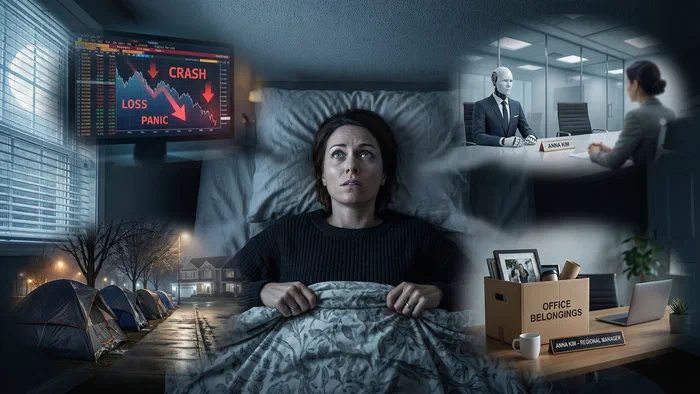
Curbing displacement. This is the big one. The problem often isn’t the screen itself – it’s what the screen pushes out. Your 8-year-old watching Minecraft builds during dinner? That’s family conversation gone. Your teenager scrolling in bed until midnight? That’s sleep gone. The AAP wants you to think less about how long and more about instead of what.
-
Communication. Are you talking with your kid about what they see online? Not interrogating – talking. What’s funny on their feed? What confused them? Kids who process their online experiences out loud with a parent handle the weird stuff better than kids who absorb it alone.
-
Creating a media plan. Device-free meals, device-free bedrooms, intentional decisions about when screens come out and when they don’t. The AAP recommends a Family Media Plan – not because rules solve everything, but because families that discuss expectations up front fight about it less in the moment.
-
Checking for problems. If your kid can’t stop when asked, melts down when you set limits, or reaches for a screen every time they’re bored, sad, or frustrated – pay attention. Kids need to learn to sit with discomfort. If screens become the only coping tool, they never build that muscle.
Notice what’s missing from this list: a number. The AAP now says the quality of screen use and what it displaces matter more than the clock.
In practice, this looks like a Tuesday night gut check. Your kid FaceTimed a friend after school (high-quality, social), then did thirty minutes of a math app (educational), then watched random YouTube until you called them for dinner (low-quality, displacing family time). Two out of three isn’t bad. You don’t need to ban the YouTube – just make sure it’s not eating the hours that belong to sleep, movement, and conversation.
What screens displace is where the real research gets interesting.
The sleep connection parents keep missing

A March 2026 study from Imperial College London , one of the largest of its kind, tracked 2,350 children across 31 schools for three years. Kids who used social media more than three hours daily showed significantly worse depression and anxiety symptoms by ages 13-15. The link was notably stronger in girls.
But here’s the part that matters most: the researchers found the relationship was mediated by sleep loss. Social media at night disrupted sleep. Insufficient sleep drove the mental health decline. The screens themselves weren’t the direct cause. The lost sleep was.
This tracks with what Wisconsin data already tells us. According to the 2023 Youth Risk Behavior Survey from the Wisconsin DPI , 51.6% of Wisconsin students report experiencing anxiety. 35% report depression nearly every day for two or more weeks. 20.9% report non-suicidal self-harm.
Those numbers should sit with you for a minute.
The Imperial College study matters because it reframes the question. Instead of asking “how many hours of screens are OK?” it asks “what is screen time stealing from my kid?” And the answer, overwhelmingly, is two things: sleep and physical activity.
80% of teens don’t move enough. That’s the real crisis.

The CDC reports that 80% of adolescents fail to get the recommended 60 minutes of daily physical activity. Eight out of ten kids. Four out of five teenagers in this country don’t move their bodies for an hour a day.
And the research on what happens when kids do get that activity is hard to ignore.
A 2024 systematic review in Health Promotion International analyzed 58 controlled trials on physical activity and mental health in young people. Over half showed significant improvements in anxiety, depression, and overall quality of life. The programs that worked best shared three traits: moderate-to-vigorous intensity, three or more sessions per week, and a structured social component.
Not a meditation app. Not a screen time tracker. Actual physical activity with other people.
Why “going analog” solves half the problem

You’ve probably seen the trend. TikTok (yes, the irony) is full of parents posting about the #GoingAnalog movement – swapping phones for film cameras, buying puzzle books, scheduling unplugged weekends. Parenting blogs are calling 2026 “the year of analog childhood.”
I like the instinct behind it. Something in the culture is shifting, and parents feel it. The problem is that removing screens without replacing them with something structured and physical only covers half the equation. Your kid might put down the iPad and pick up a sketchbook for a week. Maybe two. But boredom is powerful, and the phone is always within reach.
The families I see succeed aren’t the ones who just subtract screens. They’re the ones who add something their kid actually looks forward to.
What the research says about structured physical activity

A 2025 paper in Martial Arts Studies reviewed the evidence on martial arts as mental health interventions for youth and found something parents should pay attention to: well-structured martial arts programs promote self-efficacy, social bonding, and emotional regulation. Those are the exact skills excessive screen time erodes.
The paper argues martial arts succeed where other interventions stall because they combine three things simultaneously: physical intensity that meets clinical thresholds for mental health benefit, a built-in social structure that creates belonging, and a progression system that teaches kids to earn things through sustained effort.
That combination is rare. Team sports offer the social piece but cut kids who aren’t immediately athletic. Solo fitness offers the physical piece but feels isolating for a ten-year-old. Screen time limits offer neither.
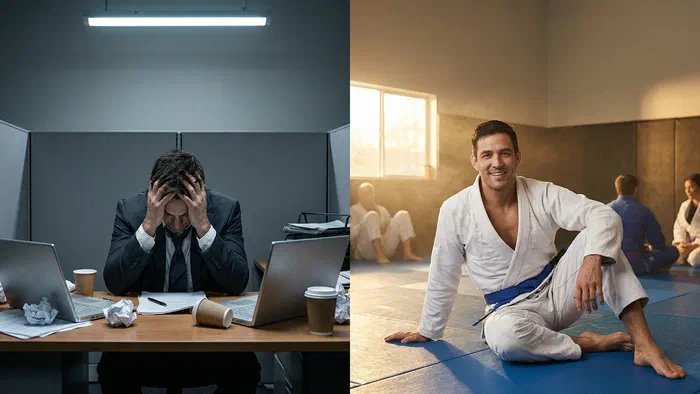
At Journey BJJ in Madison , this is what we see every week on the mat. A kid walks in glued to a parent’s phone in the lobby. Forty-five minutes later, that same kid is sweaty, grinning, and asking when the next class is. Nobody mentioned screens. Nobody had to.
Why BJJ works for screen-dependent kids
I want to be specific about why BJJ works for this problem , because “martial arts are good for kids” is too vague to be useful.
It demands full-body attention. You can’t zone out on the mat. Lose focus for two seconds during a live roll and you get swept or submitted. This isn’t like jogging where your mind wanders. BJJ requires constant problem-solving: reading your partner’s weight, anticipating their next move, adjusting your grip. For kids whose brains have been conditioned by short-form video to expect stimulation every three seconds, this is a healthy recalibration. Their brain gets the engagement it craves – through their body instead of a screen.
It replaces the dopamine loop. Screens deliver dopamine through likes, notifications, and infinite scroll. BJJ delivers it through earned achievement: your first successful escape, your first submission, your first stripe on your belt. The difference is that BJJ dopamine comes from doing something hard, which builds confidence. Screen dopamine comes from passive consumption, which builds dependency.
It fills the after-school gap. The hours between 3pm and bedtime are where screens take over. A structured activity two to three evenings per week puts a physical and social anchor in that window. And because BJJ runs year-round with no tryouts, no cuts, and no off-season, it stays consistent in a way seasonal sports can’t.
It builds what the AAP says matters. The new AAP framework emphasizes emotional regulation, face-to-face interaction, and healthy coping mechanisms – the alternatives to using screens to manage every uncomfortable feeling. BJJ teaches all three. Kids learn to handle frustration (you will get tapped), manage discomfort (training is physically demanding), and communicate with training partners. These aren’t abstract lessons. They happen on the mat, every class.
What I’d tell a parent who’s lost the screen time battle
If you’ve read this far, you’re probably past the “should I worry about screens?” phase. You already worry. The AAP’s new guidelines didn’t help because they replaced a clear rule with “it’s complicated.”
So let me be direct.
Stop trying to win the screen time war through restriction alone. You need to give your kid something better. Something physical, social, and structured enough that they choose it over the phone – not because you forced them, but because it’s genuinely more engaging.
That’s what Brazilian Jiu-Jitsu does for kids in Madison . I’ve watched it happen with hundreds of families. The kid who “hates sports” discovers they love grappling. The anxious kid who won’t try anything new finds out they’re tougher than they thought. The one who can’t focus for five minutes in class locks in for an entire sparring round. The kid who gets pushed around at school starts carrying themselves differently.
We’re not anti-screen. We’re pro-engagement. And when a kid is engaged – truly, physically, socially locked into something that challenges them – the screen thing starts to sort itself out.
Our kids’ 2-week intro program is $49 and includes a free uniform. Sign your kid up here, or schedule a free meeting with your kid’s coach if you want to talk through whether it’s the right fit.
The AAP dropped the old rules because the world changed. Your family’s response starts with what you put in place of the screens.
- Screen time
- Aap guidelines
- Mental health
- Physical activity
- Madison
Ready to Start Your Journey?
Choose the option that works best for you
Call to book: +1 (608) 416-1140