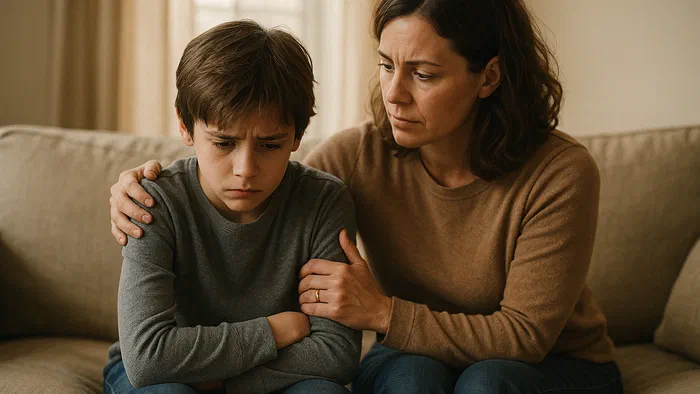
Netflix's Adolescence Scared Madison Parents. Here's What Actually Protects Kids.
If you watched Netflix’s Adolescence, you know the scene that everyone’s been talking about. A 13-year-old boy named Jamie, with a baby face and a bedroom full of schoolbooks, is pulled out of bed at dawn by police. His father is screaming. His mother is crying. And the question that hangs over the next four episodes is the one that has been keeping Madison parents up at night ever since:
Could this be my kid?
The show, released on Netflix in March 2025, swept nine Primetime Emmys including Outstanding Limited Series. It was filmed in continuous single takes, which is part of why it felt so suffocating. But the reason it stuck in parents’ throats is different. It depicted something real. Jamie gets radicalized into incel ideology through online forums after a girl rejects him and a classmate calls him one online. He murders her. His parents never saw any of it coming.
If that show made you want to take your kid’s phone and throw it in a lake, you are not alone. Search traffic for “how to protect my kid from online radicalization” spiked in the weeks after release. Therapists went viral explaining terms most parents had never heard. And here in Madison, the fear is not abstract. Madison Metropolitan School District’s most recent data showed a sharp rise in bullying reports, and UW-Madison researchers studying 1,300 local sixth graders found a hidden anxiety crisis in our own middle schools.
So let’s do something more useful than panic. Let’s talk about what the research actually says protects kids — and, just as importantly, what doesn’t.
What your son might be reading online (and what’s actually true)

Before you can talk to your kid about this stuff, you need to understand it. So here is a parent’s guide to the ideology that Adolescence depicted, broken down into what’s real, what’s distorted, and why it hooks teenage boys.
The “red pill” worldview (borrowed from The Matrix) tells boys that they have been lied to about how dating and attraction work. The “black pill” is the darker version: attraction is determined entirely by genetics and bone structure, so there is nothing you can do. You are either born attractive or you are not, and women only want the top tier of men.
The data point that gets passed around these forums like a sacred text is real. In 2009, OkCupid published internal data showing that women rated 80% of men as “below average” in attractiveness. The red pill community turned this into proof that women only want the top 20% of men and the rest are invisible.
Here is what the forums leave out. That same OkCupid dataset showed something else entirely when you look at who women actually messaged. Women’s messaging behavior was far more evenly distributed than their attractiveness ratings. Women rated most men as unattractive but messaged them anyway. The “80/20 rule” mixed two different metrics and pretended they were one. It is a statistical lie built on real data, which is the most effective kind.
A 2023 study in the Journal of Sex Research tested this directly. Researchers at the University of Saskatchewan compared 38 self-identified incels to 107 non-incels and found that incels significantly overestimated how much women value physical attractiveness and financial status, while underestimating how much women value intelligence, kindness, and humor. The incels also reported lower minimum standards for partners than non-incels did, yet had fewer matches, fewer conversations, and fewer in-person dates. The problem was not a “rigged” market. It was rejection sensitivity, depressive symptoms, and insecure attachment patterns that made every interaction feel like a referendum on their worth.
In other words: the ideology tells boys “the system is broken,” but the research says the system is not where the problem lives.
Why it sticks to teenage boys
Psychologists who study incel radicalization have identified a specific psychological profile it appeals to: boys experiencing rejection, depression, low self-esteem, and social isolation. The core trick is externalization. Instead of “I’m struggling socially and that’s painful,” the ideology offers “the system is rigged against people like you, and here is a community of others who agree.” It converts private shame into shared grievance. For a lonely 14-year-old, that reframe is enormously comforting, because it removes the need for self-reflection or change.
The online forums reinforce it with what feels like community. Boys find validation, in-group language, memes, a sense of belonging. Researchers at the University of Cordoba traced exactly how this process works in 1,487 students aged 11 to 17, and they identified two psychological pathways that make radicalization stick: kids stop feeling like their actions have consequences, and they stop seeing victims as fully human. Their summary, as reported by Phys.org : “The coldness of screens generates a moral distance from the victims.”
That finding is the spine of everything that follows. Hold on to it.
The parenting trap
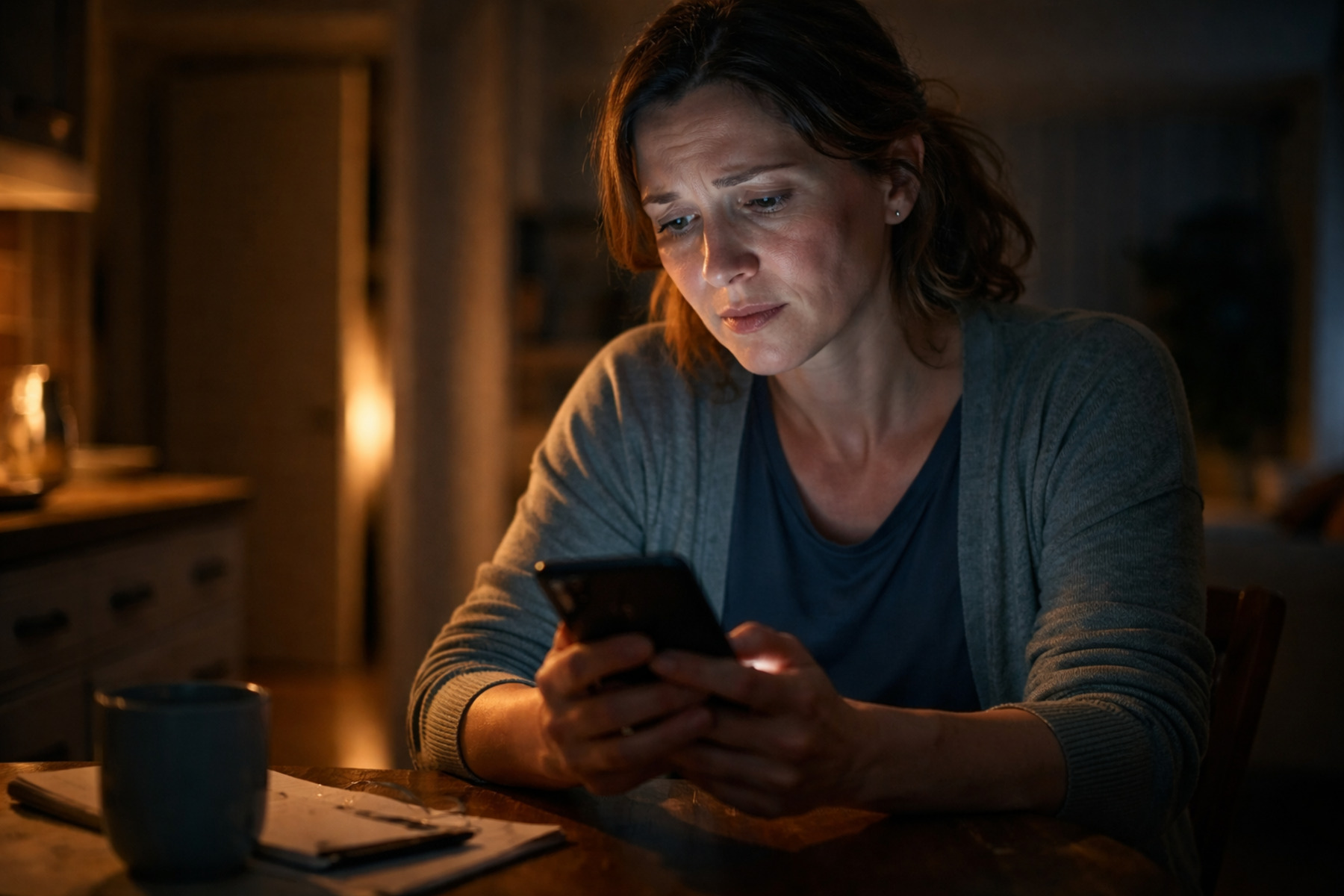
Here is where most parents go wrong after watching something like Adolescence. The instinct is to surveil, restrict, and lock down. Dr. Emily Edlynn, a clinical psychologist who writes Psychology Today’s “Parenting Is Not a Fad” , warns that the show fuels what she calls “parenting panic culture.” It presents a worst-case scenario and invites every parent to believe it could happen to any baby-faced 13-year-old.
Her finding, and this is the sentence to underline: parents’ stress and guilt about their child’s tech use predicts more problems in the parent-child relationship than the technology use itself. Fear-based parenting backfires. The child who feels surveilled pulls away. The child who feels trusted and known stays close.
So the question is not “how do I lock my kid down harder?” The question is “how do I build the relationships and environments that keep a kid from slipping into that world in the first place?”
The reason kids fall into these pipelines is social disconnection. The antidote is not surveillance. It is belonging.
The single biggest protective factor isn’t a filter. It’s belonging.

In January 2025, a study published in the Journal of School Nursing analyzed data from the CDC’s Youth Risk Behavior Survey. The researchers — McCabe, Grunin, Yu, and Strauss — looked at U.S. high schoolers and tested a simple idea: does feeling close to your school protect kids from bullying? They found students who reported strong school closeness were significantly less likely to be bullied at school, and significantly less likely to be cyberbullied.
The finding is not small. Inside that same dataset, 63.2% of female students reported being cyberbullied. More than six in ten. Belonging was one of the few factors that moved the needle.
Other studies have gone further. A 2024 review in Development and Psychopathology tracked school connectedness across longitudinal studies and found it was a protective factor against suicidal ideation in 74.4% of studies reviewed and against suicidal behavior in 50%. Another study found that social connectedness accounted for 51.57% of the relationship between bullying and loneliness — meaning belonging is doing the heavy lifting.
Remember the Cordoba finding about moral distance? A kid embedded in real relationships with real people has that distance shortened every single day. When you eat lunch with someone, drill a technique with them, see their face when they’re frustrated or scared or proud, it becomes very hard to treat them as an abstraction. A kid who is only embedded online has that moral distance stretched to breaking.
The belonging research and the radicalization research point at the same mechanism from opposite directions. Connection protects. Disconnection corrodes.
What actually works: five research-backed tools for Madison parents
Here is the part every article like this skips — the “okay but what do I do on Monday morning?” section. These are not generic. Each one is tied to the research above.
1. Prioritize strong ties over weak ties
McCabe and colleagues are blunt about this. One close friendship beats fifty Instagram followers. The question to ask is not “does my kid have friends?” but “how many hours a week is my kid in the physical presence of the same group of peers, doing something together?” That number is the one that predicts resilience.
If the answer is close to zero, you have found something to fix this month.
2. Put them in environments with an earned hierarchy
Kids slide into incel ideology partly because online hierarchies feel “fair.” You rank, you grind, you level up. Meanwhile school social hierarchies feel rigged — cliques, looks, money. Neither is healthy, but one is at least honest.
The antidote is a real environment where effort and time produce real status. A belt progression. A scout rank. A robotics team tier. Anywhere a kid can see with their own eyes that the people who show up and do the work get respected. It short-circuits the “nobody takes me seriously” spiral before it starts.
These environments do something else the research points to: they shorten moral distance. When you earn rank alongside someone, you see their effort, their setbacks, their growth. You cannot dehumanize someone whose face you watched crumble after a bad round and then watched light up the day they finally got it right. That is the opposite of what happens on a forum.
3. Make sure at least one trusted adult outside your family knows your kid
This one shows up in nearly every meta-analysis on adolescent resilience. A coach, a teacher, a youth leader, an instructor. Someone who knows your kid’s name, notices when they’re off, and shows up consistently. The research on school connectedness keeps circling back to this one person. The effect size of a single involved adult mentor is larger than almost any parenting intervention we know how to measure.
If you’re a Madison parent and you cannot name that person for your kid, that is a gap worth closing.
4. Protect against distress tolerance erosion
A kid who has never been allowed to lose, fail, or feel foolish in a safe environment has no practice tolerating it when the stakes are real. That is part of why the kids in Adolescence crumble so fast when rejected. The answer is not to stage artificial hardships. The answer is to put them in activities where losing is normal, recoverable, and followed by an adult saying “okay, try it again.”
We talk about this more in the post on how BJJ builds mental toughness in kids , but the principle holds for any environment with productive discomfort.
5. Do not surveillance-parent
This is where Dr. Edlynn’s warning lands. Covert monitoring without an underlying relationship buys you information and costs you trust. Kids find out. They always find out. The cost of that discovery is bigger than the benefit of the data.
The alternative is weirder and harder: open, curious, non-judgmental conversations about what they’re seeing online. Not “show me your phone.” More like “hey, have you seen anyone pushing Andrew Tate stuff at school?” Kids will tell you more than you expect if they are not afraid of what you will do with the information.
And now you know what to listen for. If your son mentions the “80/20 rule” or talks about how looks are the only thing that matters, you can say: “I’ve actually read about that data. Here’s what the study left out.” That conversation is worth more than any parental control app.
The honest limits — what Jiu-Jitsu will NOT do for your child
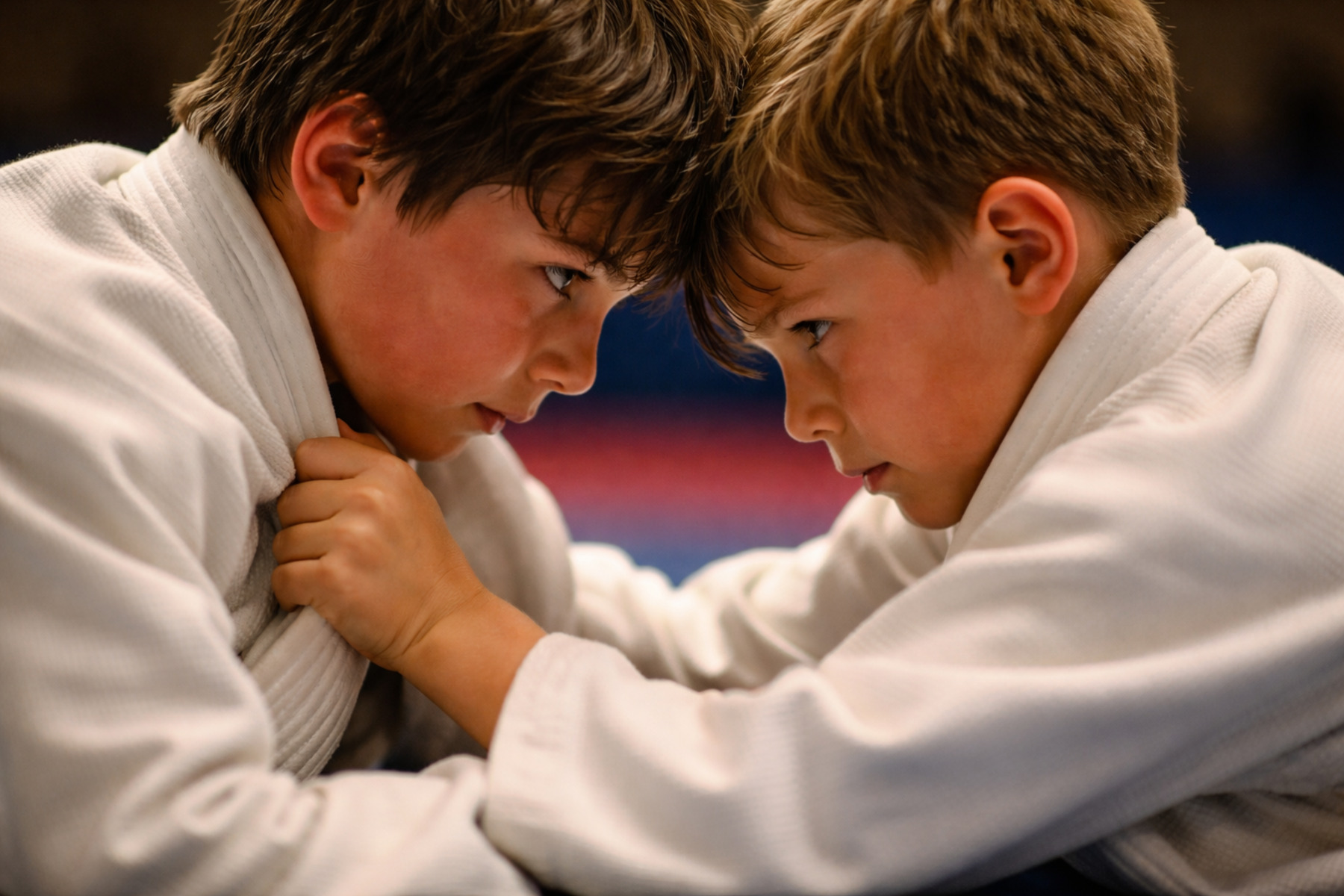
Parents can spot overselling from a block away, and they should. So here is the honest version.
Martial arts is not a cure for bullying. A review of Kyokushin Karate athletes found no unambiguous evidence that martial arts training reduces bullying as a standalone intervention. A 2023 ScienceDirect review was even more direct: “Martial arts training may have a limited effect on aggressive behavior, and caution should be considered before using martial arts as an intervention strategy.”
Read that carefully. The researchers are not saying martial arts is bad for kids. They are saying the physical training alone, stripped out of its community context, does not deliver the protective effect parents hope it will. Throwing a kid into a class once a week and expecting confidence to bloom is not how this works.
So what does work?
A 2025 analysis in the International Journal of Social Psychiatry looked across structured youth activities and drew a sharper conclusion: the activities that protect kids are the ones that combine consistent peer relationships, adult mentorship, and a real sense of purpose. Physical activity on its own does almost nothing. Physical activity embedded in a community does most of the work.
BJJ has one mechanism the research helps explain. Remember moral distance — the screen-generated gap between action and consequence that makes cyberbullying and radicalization possible? Partner-based training compresses that gap to zero. You cannot ignore the humanity of someone whose breathing you feel, whose grip you adjust, whose frustration you watch dissolve into focus over weeks of drilling together. That forced proximity is the opposite of what a screen does.
That’s the lens behind how we built Journey BJJ’s kids program — and why we’re careful about claiming too much. We are not a bullyproof panic button. We cannot guarantee your kid will never be rejected, cyberbullied, or scared. What we can offer is the scaffolding the research keeps pointing at: the same kids in the same room three times a week, under the same adults who notice when a kid is off, with a belt system that turns effort into visible rank.
The Madison context matters
If you live in Dane County, you are not imagining the pressure. Wisconsin’s 2026 budget restored $50 million for school-based mental health, but Governor Evers had requested $300 million. Parents got one-sixth of what was asked for. MMSD’s Building Bridges program expanded to 22 schools with a $1.9 million federal grant, but counselor ratios are still stretched thin.
What that means in plain English: the institutional safety net for Madison kids is real but thin. Whatever you’re doing as a parent to build belonging and trusted adults outside the home is not optional. It is the primary infrastructure, not a supplement.
If you want a deeper read on what’s happening in our schools, the post on why Madison bullying reports jumped 30% and what prevents it walks through the district data in detail, and the piece on the UW-Madison anxiety study covers the local research most parents never hear about.
What we do at Journey BJJ and why
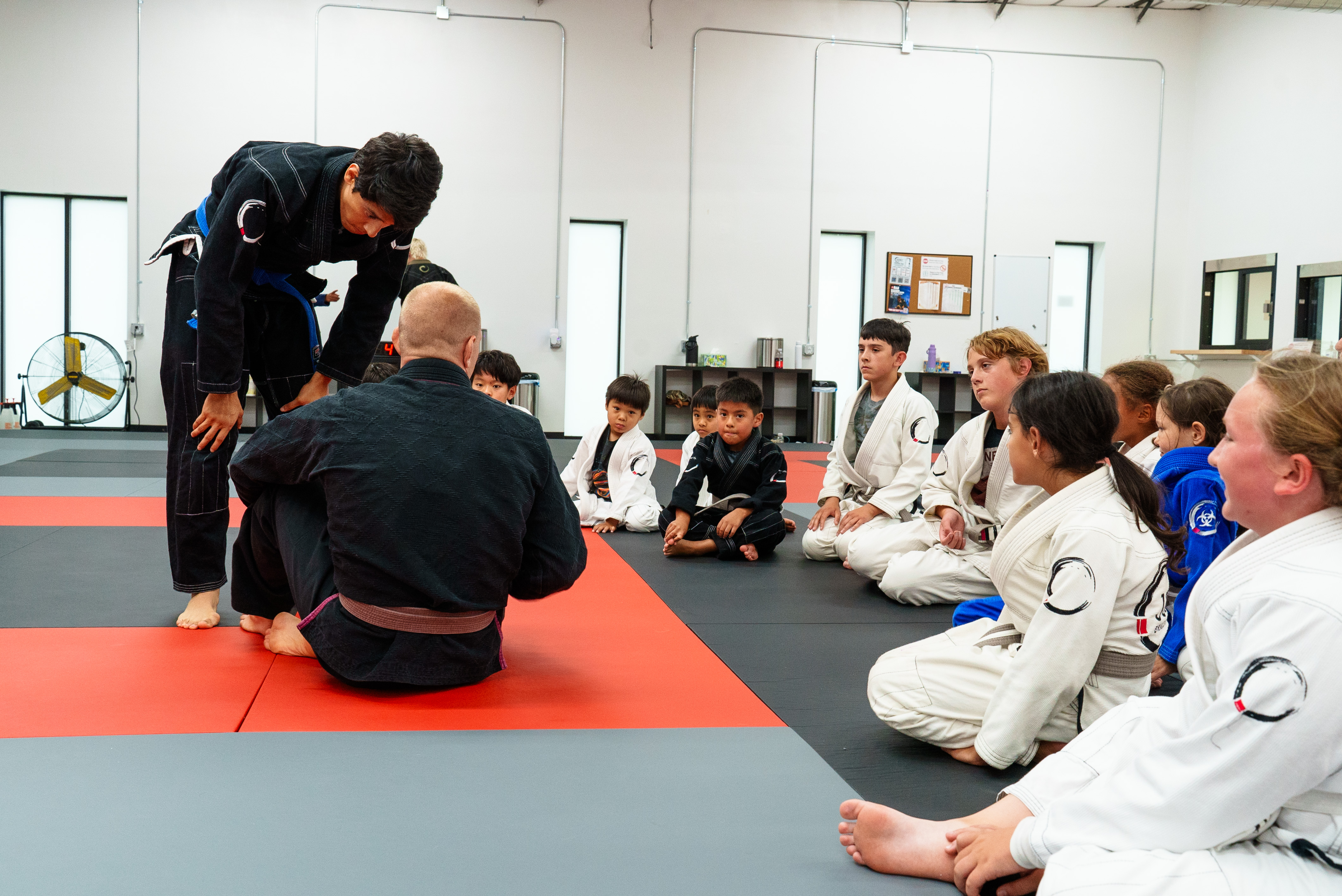
Our kids classes run Monday through Friday at 4:30 PM , 45 minutes each. The schedule is boring on purpose. Consistency is one of the research-backed ingredients. Kids see the same faces, roll with the same partners, get corrected by the same coaches.
We also run small. Coach Alex and our instructors know each kid’s name, know their parents, and notice the week a kid comes in quieter than usual. That is not a marketing claim. It is the actual mechanism the peer-connectedness research keeps pointing back at — one trusted adult who sees your kid.
If you’re curious about what the first class feels like, the parent-worry guide answers the questions almost every mom and dad asks us. And if you want the 30,000-foot view of the Madison kids martial arts scene, the complete guide to kids martial arts in Madison lays out the options.
The offer — if you want to try it
Our Kids 2-Week Intro is $49 and includes a free uniform (a $100 value). Two weeks of classes. No pressure. You come in, your kid rolls, you watch, and at the end you decide.
But I’d actually suggest something easier first. Come meet me. No class, no pitch, no commitment. Just a tour, a conversation, and a chance to tell me what’s going on with your kid so I can tell you honestly whether we’re a fit. If we’re not, I will point you somewhere that is.
Or if you’ve already read enough and you want to jump in, the full 2-week intro details are on our kids page .
Adolescence scared us for a reason. The fear is not the problem. What you do with it is. Don’t lock your kid down harder. Build them the kind of community research says actually protects them — and then stay close enough to notice when they’re slipping.
That is the whole job. It’s not easy, but it is doable. And you’re not doing it alone.
-Coach Alex, Journey Brazilian Jiu-Jitsu Academy | Madison, WI
- Kids bjj madison
- Youth mental health
- Online safety
- School connectedness
- Parenting
Ready to Start Your Journey?
Choose the option that works best for you
Call to book: +1 (608) 416-1140