Even Therapists Avoid the Only Thing Proven to Cure Fear
The best-proven treatment for fear has been sitting in plain view for decades. In 2025, researchers surveyed the therapists whose whole job is treating fear. They used it with only about two out of three patients who needed it.
The treatment is called exposure therapy. It means approaching the thing you fear, on purpose, in steps, instead of avoiding it. The survey, published in the journal Cognitive Behaviour Therapy , reached 190 working therapists, and 122 completed it. Across anxiety problems, exposure therapy was used with 65.73 percent of the patients it fit, and it filled just 41.30 percent of treatment time.
Two out of three sounds decent until you think about the third patient. Someone walked in asking for help with fear. The one method with the deepest evidence stayed on the shelf.

The reason was not the patients
What predicted skipping exposure therapy was the therapists themselves: their own negative beliefs about the treatment, and their own distress about delivering it. How severe or complex the patients were barely registered.
The therapists most prone to avoidance in their own heads were the ones who struggled most to prescribe approach to someone else. Trained specialists flinched from the thing they know works, and they flinch for the same reason you do. It feels bad to do.
The survey found one thing that predicts overcoming the flinch: training. Therapists with more of it used exposure therapy more. The people whose job is prescribing approach had to be trained into approaching.

What the cure does to your body
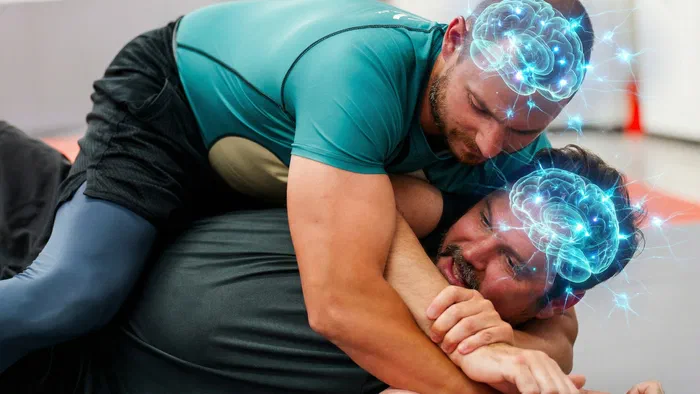
A second 2025 paper explains why exposure therapy works at the body level. A review in Psychological Bulletin gathered 132 studies on a version called interoceptive exposure. In plain words: bringing on the physical feelings of fear on purpose, so your alarm system learns they are survivable.
The exercises sound almost silly. Spinning in a chair until you’re dizzy. Breathing through a straw until you feel smothered. Therapists bring on the exact feelings a panicking body makes, in a controlled room, over and over. Those feelings stop reading as emergencies.
Most exercises in the review produced mild to moderate discomfort, about a 4 to 6 on a 0-to-10 scale. Roughly 20 percent of reps spiked into full panic. So the protocol runs on a moderate, repeatable dose of discomfort, with an occasional hard rep. And someone else controls the dial.

Therapists still predicted disaster. In a 2013 survey quoted in the review, clinicians put the odds that a patient would drop out of therapy over an intensive exposure session at 37 percent, about a third. The number recorded in actual practice: 1 percent. Your forecast of how badly the scary thing will go comes from a brain flooded with alarm chemicals. You are not estimating risk. You are estimating dread, and calling it risk.

The decision you keep re-making
Avoidance is not a character flaw. It is the factory setting. Your alarm system was built to keep you away from things that spike your heart rate, and it does not know the difference between a real threat and an intro class you have canceled twice. So your flinch at something new is the most normal thing in the world.
Normal, and self-defeating. Both papers point at the same override, and there is only one. Graded approach. Do the feared thing at a survivable dose, repeatedly, until your body updates its prediction. Confidence is what comes out the other end. We’ve written before about why you don’t need to find the perfect right thing before starting. This research says the choosing matters less than the approaching.
A gym is not a clinic, and a coach is not a therapist. If fear is interfering with your daily life, see a licensed therapist and ask for exposure therapy by name. The first study suggests you cannot assume you’ll get it by default.

The exposure protocol nobody calls one
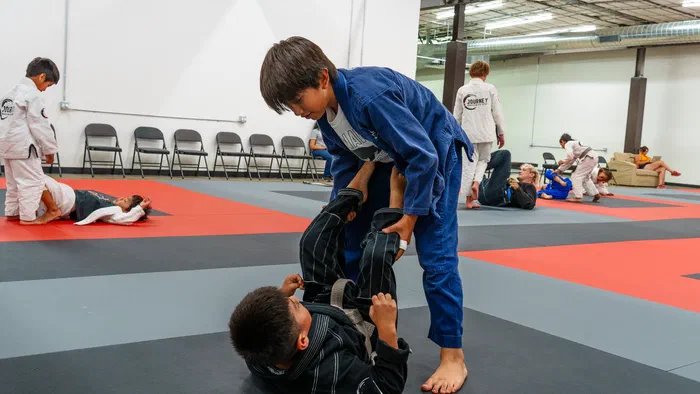
Look at what a beginner Brazilian Jiu-Jitsu class actually is. You show up by choice, on a schedule. You put your hands on a stranger. Your heart rate climbs. Someone heavier than you applies pressure while you solve a problem. You get breathless and stuck. Then the round ends, you slap hands, and you are fine. Next week you do it again, slightly less alarmed.
Raised heart rate, breathlessness, physical pressure, felt over and over in a controlled setting until the alarm resets: that is the mechanism in those 132 studies, nearly word for word. Nobody on the mat calls it exposure therapy, and no one has run the trial that would prove it works the same way. It runs on the same engine anyway.
The dose is graded, too. At Journey BJJ in Madison the grading is built into the hour. Adult classes go straight into technique: 20 to 30 minutes of drilling with a partner who is helping you, not fighting you. Then 10 to 15 minutes of positional sparring, a narrow slice of the real thing. Then 10 to 15 minutes of live rolling. That is a ladder inside a single class, and a coach watches the dose the whole way. Most reps land in that moderate 4-to-6 zone. Once in a while one spikes. You survive that one too, and it teaches you the most.
This is also why the first class is the hardest, and the first month is where the change happens. Session one, your alarm fires at everything. By week four the same positions produce half the signal. You start noticing what your body can do while uncomfortable. That carries. The hard talk at work. The turbulence on a flight. None of them are jiu-jitsu, but your reset alarm doesn’t know that.

Maybe the fear stopping you is social, not physical: the feeling of being watched while you’re bad at something. We wrote about that specific fear here . The short version is the same. The forecast is worse than the event.

Three things to try this week
Run the forecast experiment on yourself. Before your next avoided thing, write two numbers down. How bad you predict it will be, 0 to 10. And the odds you’ll bail partway. Do the thing. Write the actual numbers. The clinicians in that 2013 survey predicted 37 percent of patients would quit over exposure therapy; 1 percent did. Catch your forecast lying once, and every future forecast loses authority.

Pick a 4, not a 10. The research protocol runs on moderate doses, repeated. If the thing you’re avoiding is a 9, find its 4. The class instead of the competition. The question in the small meeting instead of the big talk. Approach at a dose you can finish, because finishing is the data your alarm updates on.
Decide once, not nightly. Every evening you re-decide whether to face the thing, avoidance gets a fresh vote. Book something with a date and a time on it, and tell one person. If that something is jiu-jitsu, here is exactly what a first class looks like . Our two-week trial for $49 includes the uniform and no long-term commitment, so the dose stays survivable in every sense.

The therapists who use exposure therapy the most are not the fearless ones. They are the trained ones. Approach is a skill someone drilled into them, one uncomfortable rep at a time. That skill is not reserved for people with doctorates. Your alarm does not reset because you argue with it. It resets when you show it. Go show it something.
- Adult bjj
- Mental health
- Beginners
- Research
Ready to Start Your Journey?
Choose the option that works best for you
Call to book: +1 (608) 416-1140